
Backpacker Hostels: Smart Stays for Remote Work

Backpacker Hostels: Smart Stays for Productive Remote Work
Backpacker hostels are evolving beyond traditional budget accommodation, increasingly integrating reliable infrastructure and dedicated workspaces to support the operational requirements of remote professionals. This dual functionality positions them as strategic lodging options for digital nomads seeking both productivity and community engagement.
- Hostels are adapting to remote work demands by providing reliable Wi-Fi and designated work zones.
- The social architecture of hostels facilitates networking and community building among travelers.
- “Design hostels” specifically cater to a creative demographic, offering specific environments for creative work.
Our assessment synthesizes current travel industry reports, user experience data from platforms like TripAdvisor, and expert analyses on the evolving landscape of remote work and hospitality. We prioritized information regarding infrastructure reliability, community integration, and specific hostel typologies.
The operational paradigm of modern backpacker hostels now frequently incorporates amenities critical for remote work functionality. This includes reliable internet connectivity and designated quiet zones, a significant departure from historical models. For instance, the Singer109 Backpacker Apartment Hostel in Berlin has adapted its offerings to accommodate guests requiring stable work environments, with reviews and details updated as recently as 2026.
This infrastructural shift supports a new demographic of traveler, enabling sustained productivity while engaging with diverse social structures. The integration of work-conducive environments allows remote professionals to maintain operational continuity, a critical factor for long-term travel.
Beyond Budget: Hostels as Remote Work Hubs

Hostels are undergoing a significant functional evolution, transitioning from rudimentary budget accommodations to functional hubs for remote professionals. This paradigm shift addresses the increasing demand for integrated living and working environments within a travel context.
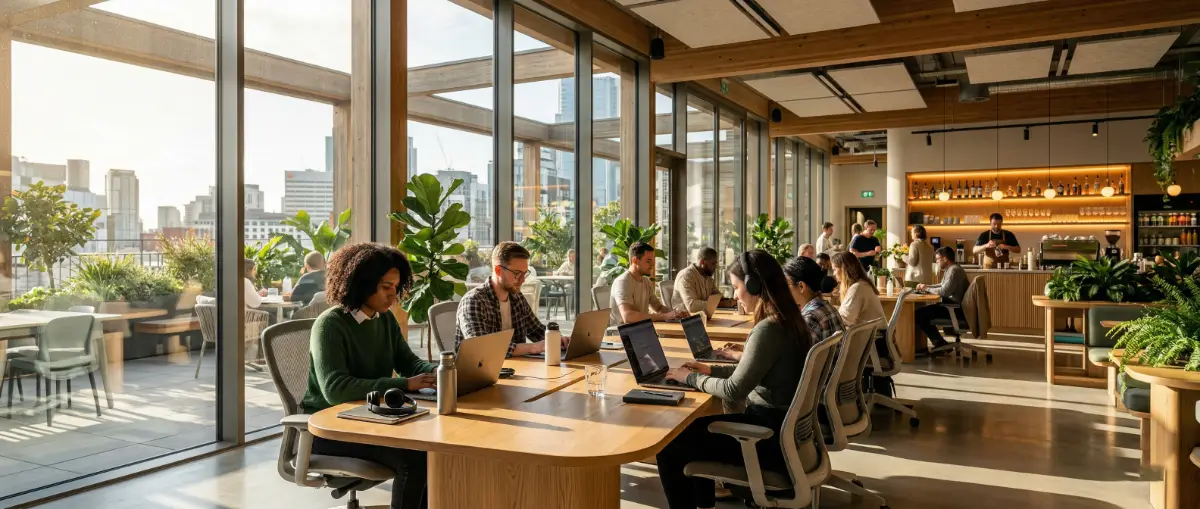
The primary operational requirement for remote workers in any location is robust network infrastructure. Modern hostels prioritize high-speed, reliable Wi-Fi connectivity, recognizing it as a critical utility rather than a luxury. Many establishments now feature dedicated co-working spaces or quiet zones, distinct from social areas, to facilitate focused productivity.
The emergence of the digital nomad demographic has catalyzed the development of specialized hostel models. These establishments cater to a creative and professional cohort, offering well-designed dorm rooms and communal areas that foster both collaboration and individual work. This trend is highlighted extensively in global analyses of the best design hostels around the world.
Finding Your Tribe: Social Connections and Community

Hostels operate as critical social infrastructure, enabling the formation of transient communities and facilitating interpersonal connections among diverse traveler cohorts. This functional architecture supports both spontaneous interaction and targeted community aggregation.
Hostel environments are engineered to maximize social interaction, serving as primary nodes for network expansion among solo travelers. The communal design of dorm rooms and shared spaces inherently promotes dialogue and collaborative activity. Travelers frequently leverage these environments to establish new connections, extending to digital platforms where dating applications are utilized while traveling solo to augment social networking capabilities abroad.
"Hostels have evolved from mere accommodation units into complex social ecosystems, designed to optimize human interaction and community formation among a globally mobile population."
Spotlight on Design Hostels and Key Destinations
The operational paradigm of backpacker accommodation has diversified, giving rise to “design hostels” that prioritize aesthetic integration and community curation. These establishments deviate from conventional models, offering uniquely configured dorm rooms and communal spaces. They are engineered to attract a specific demographic, often a creative crowd seeking both functional lodging and a suitable environment.
Strategic geographic locations are emerging as primary hubs for the convergence of backpacker culture and remote work requirements. Berlin, for instance, hosts facilities that integrate both private and communal living structures. Similarly, regions within Mexico, including destinations like Tulum, are experiencing increased demand for infrastructure capable of supporting digital nomads, as seen in active discussions regarding backpacking around Mexico.
| Metric | Value | Notes |
|---|---|---|
| Information Update Cycle (Initial) | Aug 30, 2019 | Establishes historical data point for market analysis. |
| Information Update Cycle (Recent) | May 18, 2024 | Indicates contemporary operational status and review currency. |
| Information Update Cycle (Projected) | Sep 2025 - 2026 | Suggests forward-looking data availability or review relevance. |
| Geographic Operational Focus | Berlin, Mexico | Identifies primary operational zones for backpacker hostels. |
The Smart Choice for Modern Remote Workers
Hostels are undergoing a functional re-evaluation, transitioning from budget accommodation to integrated operational hubs for the modern remote workforce. This shift positions them as strategic assets for individuals balancing professional output with global mobility.
Pros
- ✅ Cost-Efficiency
- ✅ Network Expansion
- ✅ Resource Accessibility
- ✅ Cultural Immersion
Cons
- ❌ Privacy Constraints
- ❌ Noise Variability
- ❌ Security Protocols
- ❌ Infrastructure Inconsistency
Modular Final Verdict
- If a remote worker prioritizes cost-efficiency and social networking, then a hostel represents an optimal logistical solution.
- If the work demands absolute privacy and consistent silence, then alternative accommodation structures may be more suitable.
- If the objective includes cultural immersion and flexible scheduling, then the hostel environment provides a conducive operational base.
Frequently Asked Questions
01 How do hostels cater to remote workers?
Hostels are increasingly offering reliable Wi-Fi and dedicated workspaces to support digital nomads balancing travel and productivity.
02 Are there specific hostels known for their design or creative atmosphere?
Yes, 'design hostels' cater to a funky, creative crowd, offering uniquely designed dorm rooms for a new breed of backpacker.
03 Can hostels be a good option for solo travelers looking to meet people?
Hostels are often highlighted as great places for solo travelers to meet new people and foster social connections.
04 What kind of experiences can I expect in a hostel beyond just a bed?
Beyond just budget accommodation, hostels offer vibrant communities, opportunities to meet diverse travelers, and sometimes unique design aesthetics.
05 Are there specific locations known for good backpacker hostels?
Locations like Berlin and Mexico are popular destinations for backpackers seeking varied experiences.
06 How updated is information on hostels like Singer109?
Information for hostels like Singer109 Backpacker Apartment Hostel is regularly updated, with reviews and details available as recently as 2026.

Aisha Patel
Green Impact Architect
Forging sustainable global travel through strict ecological audits.