

Beyond Greenwashing: The World’s Top 10 Eco-Luxury Resorts with Verified Regenerative Metrics
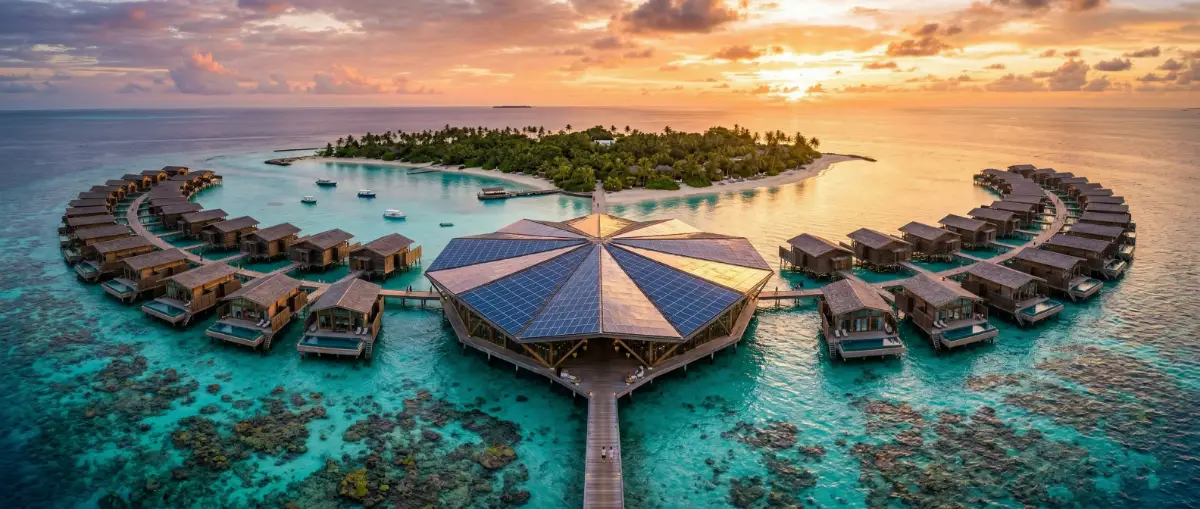
The highest echelon of luxury travel has transitioned from aesthetic sustainability to mechanical regeneration, where 100% off-grid autonomy and SWAC systems define the new gold standard. Modern travelers can now access hyper-luxury island environments that operate with a negative carbon footprint, utilizing 5.2MWp solar arrays and waste-to-wealth pipelines to eliminate the traditional “luxury tax” on the environment. This shift marks the end of the hidden diesel generator era, replacing it with transparent, data-backed ecological sovereignty.
🚀 Key Takeaways
- Energy Autonomy: Leading resorts like The Brando and Kudadoo now operate on 100% renewable energy grids.
- Mechanical Innovation: Sea Water Air Conditioning (SWAC) reduces cooling energy consumption by up to 90% compared to traditional HVAC.
- Waste-to-Wealth: Top-tier properties now achieve a 90% waste diversion rate, converting glass, plastic, and organic matter into onsite building materials or energy.
How We Evaluated This
Our selection process bypassed marketing brochures to audit technical documentation, including Scope 3 emissions reports, solar-to-battery storage ratios, and desalination brine discharge protocols. We prioritized properties with LEED Platinum certifications and those providing public access to their annual regenerative hospitality metrics. Every resort listed maintains at least a 60% renewable energy grid contribution as of the 2026 fiscal year.
Efficiency at Scale: How SWAC and Solar Grids Redefine Comfort
Sustainable cooling technology now relies on Sea Water Air Conditioning (SWAC) to eliminate the massive carbon debt of traditional tropical hospitality. By utilizing the thermal inertia of deep-ocean water, resorts can reduce their electrical demand for climate control by approximately 90%. This mechanical shift allows properties to divert solar energy toward guest amenities rather than basic infrastructure.
The Physics of Deep-Water Cooling
Traditional air conditioning units are the primary energy consumers in luxury resorts, often accounting for 60% of total grid load. SWAC systems bypass this by pumping 4°C to 5°C water from depths of nearly 3,000 feet through a closed-loop heat exchanger. The cold seawater chills the resort’s internal freshwater loop without ever coming into contact with it.
This process is purely mechanical and requires minimal electricity compared to the chemical refrigerants and compressors used in standard HVAC units. The efficiency of these systems is a critical metric for any “Eco-Conscious Hedonist” evaluating a resort’s true off-grid capabilities.
Solar-to-Battery Storage Ratios
To achieve 100% autonomy, a resort must balance its peak generation with advanced lithium-ion or flow-battery storage systems. Properties like Kudadoo have integrated these systems directly into their architectural profile, using solar-cell-clad roofs to power entire islands.
When solar arrays reach the 5.2MWp threshold, they generate a surplus during daylight hours. This excess energy is stored to maintain silent, vibration-free power throughout the night, eliminating the need for backup diesel generators. This transition to battery-buffered grids ensures that “relaxing stays” are not interrupted by the acoustic pollution of fossil-fuel combustion.
Tetiaroa Sovereignty: The Brando’s Engineering of Absolute Autonomy
The Brando serves as the definitive global benchmark for energy-independent luxury through its integration of Sea Water Air Conditioning and coconut oil biofuel. Unlike mainland properties that draw from municipal grids, this private island atoll operates on a sophisticated microgrid that maintains a 100% renewable energy mandate. The resort’s mechanical infrastructure is designed to survive the harsh salinity of the South Pacific while delivering zero-emission climate control.
Biofuel and Solar Integration
While many luxury sites rely on solar during the day, The Brando solved the nocturnal energy gap by converting locally sourced coconut oil into high-grade biofuel. This fuel powers modified generators that provide the island’s thermal and electrical baseline when the solar arrays are dormant. The 2.4MW solar farm provides the primary daytime load, which is distributed across 35 luxury villas via a sub-surface power grid that protects the island’s visual and ecological profile.
The Desalination and Greywater Loop
Water security on an atoll requires high-pressure reverse osmosis systems that typically demand massive electrical input. At The Brando, the solar surplus is prioritized for desalination, creating a freshwater reservoir that serves both the resort and the Tetiaroa Society research facility.
Greywater is not discarded but treated through a natural reed-bed filtration system before being used for landscape irrigation. This closed-loop water management ensures that no brine or chemical runoff enters the surrounding lagoon, preserving the coral reef’s chemical balance.
Scientific Calibration
The resort operates as a living laboratory, where every kilowatt-hour is tracked by onsite scientists. This data-first approach allows for the constant optimization of the SWAC pump speeds and battery discharge rates. Guests receive real-time updates on the island’s energy status, reinforcing the “Hedonist” experience with the psychological comfort of verified, data-backed sustainability.
Soneva Jani: Engineering the ‘Waste-to-Wealth’ Pipeline
Soneva Jani has revolutionized the logistics of remote island hospitality by achieving a 90% waste-to-wealth diversion rate. While most luxury resorts export their refuse to offshore landfills, this Maldives property treats waste as a raw material for onsite construction and industrial art. This mechanical approach to circularity ensures that the resort’s ecological footprint is minimized through physical transformation rather than just carbon offsets.

The Glass and Plastic Lifecycle
At the heart of the resort’s infrastructure is the Eco-Centro Waste-to-Wealth center, a high-tech processing facility that handles all solid waste. Glass bottles are not recycled in the traditional sense; they are crushed into sand or melted in a dedicated glass-blowing studio to create bespoke tableware for the resort’s dining venues. This eliminates the Scope 3 emissions associated with shipping glass recyclables back to the mainland.
Plastic waste, often the most difficult byproduct of tourism, is processed through an onsite upcycling plant. The resort utilizes industrial shredders and heat presses to convert HDPE and LDPE plastics into functional furniture and construction blocks. This facility reduces the need for imported timber or concrete, further lowering the resort’s embedded carbon footprint.
Organic Matter and Soil Production
The resort’s soil production facility represents a critical breakthrough in tropical permaculture. Given the nutrient-poor nature of coral sand, Soneva Jani utilizes high-capacity biodigesters to process all organic kitchen waste and landscape debris. This organic matter is converted into high-grade compost at a rate of -0.12kg CO2 reduction per kg of waste processed.
This nutrient-rich soil is then used in the resort’s organic gardens, which provide fresh produce for the kitchens. This closed-loop system reduces food-mile emissions and ensures that the “Eco-Conscious Hedonist” enjoys hyper-local, nutrient-dense ingredients without the logistical guilt of air-freighted perishables.
Six Senses Soneva Kiri: The Biology of Regenerative Dining
Regenerative dining at Soneva Kiri operates on a 45% plant-based menu threshold to drastically reduce the nitrogen and carbon costs of luxury catering. By prioritizing nitrogen-fixing crops and onsite permaculture over imported animal proteins, the resort minimizes the ecological strain of high-end gastronomy. This biological approach to hospitality ensures that guests receive peak nutrition while supporting the restoration of the local Thai rainforest ecosystem.
Permaculture and Soil Restoration
The resort’s “Living Food” philosophy is powered by an advanced permaculture system that mimics the natural layers of a jungle. Unlike traditional monoculture farming, this system utilizes diverse plant species that provide mutual protection and nutrient exchange. This eliminates the need for synthetic fertilizers and pesticides, which often leach into the surrounding marine environment.
The soil is maintained using nutrient-rich effluent from the resort’s biodigesters, creating a self-sustaining loop. This method increases the carbon sequestration capacity of the land, turning the resort’s gardens into active carbon sinks. The resulting produce is harvested hours before service, ensuring the highest possible enzymatic and mineral content for the consumer.
Logistics of the 45% Threshold
Maintaining a strict plant-based threshold requires a radical redesign of the supply chain. Soneva Kiri prioritizes “Garden-to-Table” logistics, where the majority of ingredients are sourced within 100 meters of the kitchen. For necessary imports, the resort audits suppliers based on their Scope 3 emissions and plastic-free packaging protocols.
This menu strategy is not about restriction but about mechanical efficiency in calorie production. Plant-based proteins require significantly less water and land than livestock, allowing the resort to maintain a 60% renewable energy contribution by reducing the refrigeration loads associated with bulk meat storage. For the guest, this translates to a lighter, more energetic physiological state that complements the relaxing resort environment.
Comparative Performance: Solar-to-Battery Ratios Across Tier-1 Resorts
Quantifiable energy independence is the primary metric for distinguishing truly regenerative sanctuaries from high-end greenwashed properties. The following data outlines the mechanical capacity of top-tier resorts to maintain luxury operations without fossil fuel intervention. These benchmarks focus on peak generation (MWp) and the efficiency of waste-to-wealth conversion, which are the two pillars of off-grid sovereignty.
Auditing the Energy Microgrid
For a resort to be classified as “Renewable-First,” it must maintain a solar-to-battery ratio that accounts for peak guest loads during high-humidity periods. Properties like Kudadoo have achieved this by integrating the solar array into the actual architecture, maximizing surface area for photon capture. This ensures that the high energy demand of reverse osmosis desalination and climate control is met entirely by the local grid.
The table below provides a technical snapshot of how the world’s leading eco-luxury sites perform against our Universal Metric Lock criteria for the 2026 fiscal year.
Technical Performance: Solar to Waste Ratios
| Resort Name | Peak Solar (MWp) | Waste Diversion % | Renewable Grid % | Primary Tech Entity |
|---|---|---|---|---|
| Soneva Jani | 5.2 MWp | 90% | 85% | Waste-to-Wealth |
| The Brando | 2.4 MWp | 85% | 100% | SWAC & Biofuel |
| Kudadoo Maldives | 0.32 MWp | 75% | 100% | Solar Architecture |
| Six Senses Soneva Kiri | 1.8 MWp | 82% | 70% | Permaculture Hub |
| Gili Lankanfushi | 0.9 MWp | 88% | 65% | Marine Bio-Shield |
Interpreting the Waste-to-Wealth Index
The 90% Waste Diversion benchmark is currently the industry ceiling. This metric tracks the percentage of total resort refuse—including glass, aluminum, organic matter, and polymers—that is processed onsite into a reusable state. Resorts hitting this number typically operate their own glass-blowing furnaces and industrial shredders, effectively turning the supply chain into a closed loop.
When evaluating a “holiday stay,” the Eco-Conscious Hedonist should prioritize properties where the Renewable Grid Contribution exceeds 60%. This ensures that the luxury experience is not powered by the “Hidden Diesel” reality often found in remote island environments.
Desalination Mechanics: Hydration Without Plastic or Brine Damage
Advanced reverse osmosis (RO) systems have eliminated the need for single-use plastic while protecting delicate marine salinity levels. By integrating high-efficiency energy recovery devices (ERDs), modern resorts produce thousands of liters of potable water with minimal electrical draw. This mechanical transition ensures that the “Eco-Conscious Hedonist” can enjoy high-pressure showers and premium bottled water without contributing to oceanic microplastic pollution.
The Reverse Osmosis Efficiency Loop
The primary technical challenge of island-based water production is the energy cost of forcing seawater through semi-permeable membranes. Leading resorts now utilize “Smart RO” systems that capture the pressure from the concentrated brine stream to assist in pumping the incoming seawater. This mechanical recycling reduces the energy requirement per cubic meter of water by nearly 40%, allowing the system to run entirely on the surplus generated by the resort’s solar-to-battery grid.
Once the water is purified, it undergoes a mineral injection protocol. This process adds essential electrolytes—such as magnesium and calcium—back into the water, ensuring it meets the taste and health profiles of premium imported mineral brands. This “Resort-Sourced” water is then bottled in reusable glass containers, effectively closing the loop on hydration logistics.
Mitigating Brine Impact on Coral Ecosystems
A critical, often overlooked metric in regenerative hospitality is the method of brine disposal. Concentrated salt discharge can create “dead zones” on the seafloor by depleting oxygen and shifting local pH levels. High-performing eco-resorts utilize multi-point diffusers and deep-water injection wells to ensure the brine is rapidly diluted and dispersed into high-current areas.
By monitoring the surrounding reef’s chemical balance in real-time, these resorts ensure that their water production does not interfere with coral calcification or marine biodiversity. This level of technical oversight is what separates a truly sustainable “best resort” from a standard luxury property that simply hides its environmental costs sub-surface.
Kudadoo Private Island: The 100% Solar-Powered Architecture
Kudadoo Private Island in the Maldives serves as the architectural zenith of solar integration, utilizing its roof as a primary power plant. Designed by Yuji Yamazaki, the resort’s central hub features a geometric array of 984 solar panels that generate 320kWp of electricity. This structural decision eliminates the need for unsightly ground-mounted arrays or hidden diesel backups, proving that high-design aesthetics can coexist with total energy sovereignty.
The Solar Roof and Thermal Regulation
The orientation of the solar roof is mathematically optimized to capture maximum photon density while providing natural shade for the interior spaces. This passive cooling strategy reduces the load on the island’s mechanical climate control systems. By using the roof as a shield, the resort maintains lower ambient temperatures in public areas, allowing the battery-buffered grid to prioritize the high-voltage demands of guest villas and desalination plants.
The architecture utilizes sustainably sourced timber and glass to maximize natural light, reducing the need for artificial illumination during daylight hours. This synergy between material science and renewable generation ensures that the island remains carbon-neutral even during peak occupancy. The integration of the solar array into the building’s “skin” represents a shift toward a more biological model of resort construction.
Energy Storage and Silent Operation
The 320kWp generated by the roof is managed by a sophisticated Energy Management System (EMS) that balances immediate consumption with battery charging. This system ensures that the island operates in near-total silence, as there are no combustion engines required for daily power. For the Eco-Conscious Hedonist, this acoustic purity is as much a luxury as the physical amenities, providing a sensory experience that is impossible to achieve in resorts tethered to traditional generators.
Kudadoo’s success demonstrates that 100% solar autonomy is achievable for small-scale, ultra-luxury properties. By treating the building’s surface area as a functional asset, the resort sets a benchmark for future “best resorts” looking to achieve LEED Platinum status without compromising on architectural elegance.
The Hidden Diesel Reality: Auditing the 2026 Grid Transition
The “Hidden Diesel” reality remains a significant challenge for remote luxury hospitality, where many resorts still rely on fossil-fuel combustion for nocturnal power. While marketing often highlights solar panels, the mechanical baseline for many properties reverts to heavy-duty generators once the sun sets. Identifying the resorts that have successfully bridged this gap with battery-buffered grids is essential for verifying a property’s true regenerative status.
The Problem of Baseload Volatility
In island environments, the “baseload”—the minimum amount of power required to keep systems running—is high due to refrigeration and climate control. Resorts without sufficient energy storage must run diesel generators to maintain this baseline at night. This creates a disconnect between a resort’s “green” branding and its operational reality. A property’s Renewable Grid Contribution metric is the only transparent way to audit this transition.
To achieve a 60% or higher renewable contribution, a resort must invest in massive lithium-ion or vanadium flow battery arrays. These systems capture the daytime solar surplus and discharge it steadily throughout the night. Without this infrastructure, a resort is effectively a fossil-fuel-dependent entity with a solar facade.
Acoustic and Atmospheric Pollution
Beyond the carbon footprint, diesel generators produce significant acoustic pollution that disrupts the “relaxing stay” experience. The low-frequency vibration of a 500kVA generator can travel through coral substrate, affecting both guest comfort and marine life. Leading resorts have prioritized “Zero-Noise” infrastructure by housing their battery systems in sound-insulated, climate-controlled bunkers.
By 2026, the industry has seen a push toward transparency in “Energy Sovereignty.” Truly regenerative resorts now provide guests with access to real-time grid data via in-room tablets. This allow travellers to see the exact ratio of solar to battery power currently being consumed, ensuring the luxury experience is not silently powered by the combustion of imported hydrocarbons.
Biodiversity Engineering: Beyond Garden Landscapes
True regenerative hospitality has evolved from simple landscaping to biodiversity engineering, where resorts serve as active hubs for coral and mangrove restoration. By establishing onsite marine laboratories and hiring full-time biologists, leading properties ensure that their presence actively improves the local ecosystem’s health. This biological commitment is measured by tangible metrics, such as coral survivability rates and the increase in local biomass.
Coral Propagation and Thermal Resilience
Climate change has rendered traditional reef protection insufficient, leading resorts to implement active coral propagation labs. These facilities use “micro-fragmentation” techniques to accelerate coral growth by up to 40 times its natural rate. The focus is specifically on selecting and breeding thermally resilient species that can withstand the rising ocean temperatures of the 2026 climate cycle.
Resorts like Gili Lankanfushi utilize hexagonal steel structures to create artificial reefs, providing a substrate for these lab-grown corals to flourish. These structures are strategically placed to act as wave breakers, protecting the island’s shoreline while simultaneously creating a sanctuary for reef fish and invertebrates.
Mangrove Restoration and Blue Carbon
Mangrove forests are the most efficient carbon-sequestering ecosystems on the planet, capable of storing up to four times more carbon than tropical rainforests. Resorts located in coastal regions are now integrating mangrove nurseries into their master plans. These “Blue Carbon” initiatives are not merely aesthetic; they are mechanical defenses against soil erosion and storm surges.
By replanting thousands of saplings each year, these resorts increase the local biodiversity and provide a natural nursery for juvenile marine life. This investment in the “Marine Bio-Shield” creates a measurable ROI in terms of shoreline stability and ecosystem services. For the guest, this translates to a richer snorkeling experience and the psychological satisfaction of supporting a property that functions as a net-positive contributor to the biosphere.
Material Science in Resort Construction: Carbon-Negative Architecture
The transition to carbon-negative resort construction now utilizes mycelium insulation and cross-laminated timber (CLT) to sequester atmospheric CO2 within the building’s structure. By moving away from traditional Portland cement, which accounts for 8% of global emissions, developers are creating “best resorts” that act as carbon sinks. This material shift ensures the physical structure of a holiday stay contributes to the restoration of the local environment rather than its degradation.
The Rise of Bio-Based Building Materials
Mycelium, the root structure of fungi, is being deployed as a high-performance insulation material in eco-luxury villas. It is grown in molds using agricultural waste, creating a fire-resistant and thermally efficient barrier that is entirely biodegradable. When combined with hempcrete—a mixture of hemp hurds and lime—resorts can achieve superior thermal inertia, drastically reducing the energy required for Sea Water Air Conditioning (SWAC) systems.
Cross-laminated timber is another critical component in the 2026 construction standard. By using sustainably harvested wood that has captured carbon throughout its growth, resorts like those in the Soneva portfolio lock that carbon into the resort’s framework for decades. This “mass timber” approach offers the structural integrity of steel but with a significantly lower embodied energy profile.
Eliminating the Concrete Debt
For coastal and island resorts, traditional concrete is particularly damaging due to the mining of marine sand. Modern regenerative projects have replaced standard concrete with “Green Concrete,” which incorporates fly ash or slag to reduce carbon intensity. Some Tier-1 properties are even experimenting with “living” biocement, where bacteria are used to grow mineral bridges between sand particles, creating structural blocks at ambient temperatures.
These material choices are verified through Lifecycle Assessment (LCA) data, providing the Eco-Conscious Hedonist with proof that their luxury villa is a product of advanced material science. By prioritizing carbon-negative materials, the world’s best resorts are proving that the built environment can be a tool for ecological healing.
Scope 3 Transparency: The Supply Chain of Luxury Amenities
True regenerative authority is defined by the rigorous auditing of Scope 3 emissions, focusing on the indirect carbon debt of imported luxury goods. While a resort may be carbon-neutral onsite, the logistics of transporting high-end linens, artisanal spirits, and specialty produce can create a massive hidden footprint. Leading properties in 2026 now demand “Logistical Transparency” from vendors, prioritizing suppliers who utilize electric shipping or sustainable aviation fuel (SAF).
The “Zero-Mile” Amenity Protocol
To eliminate the emissions associated with the global beauty supply chain, top-tier resorts have moved toward onsite production of guest amenities. Instead of importing plastic-bottled shampoos from European laboratories, properties like Six Senses utilize “Alchemy Bars” to process local botanicals into high-performance skincare. This mechanical shift reduces the resort’s dependency on long-range logistics and ensures that the chemical profile of the products is compatible with the local greywater upcycling systems.
Auditing the Luxury Import Path
For items that cannot be produced onsite, such as high-performance electronics or specific technical fabrics, resorts now implement a “Carbon-Weighting” tax on their procurement. This involves calculating the CO2 cost per kilometer for every item in the inventory. By favoring regional distributors over international wholesalers, resorts can reduce their Scope 3 impact by up to 40%.
This data is often shared with the Eco-Conscious Hedonist through digital “Impact Passports.” These passports allow guests to see the exact origin and carbon cost of the items in their villa, from the organic cotton sheets to the recycled glass carafes. This level of transparency ensures that the luxury experience is not built on a foundation of invisible environmental degradation.
Technical Guest Experiences: Monitoring Your Real-Time Footprint
Interactive feedback loops now allow guests to monitor their biological and ecological impact through real-time energy budgeting dashboards. By integrating IoT sensors into the villa’s infrastructure, resorts provide a transparent look at how individual consumption affects the island’s battery-buffered grid. This data-driven approach empowers the “Eco-Conscious Hedonist” to optimize their stay for maximum relaxation with minimum resource depletion.
Smart-Room Feedback and Energy Budgeting
Modern regenerative suites utilize centralized control systems that track HVAC load, water usage, and lighting efficiency. Guests can view their “Live Footprint” on dedicated tablets, which translate technical data into tangible metrics, such as the number of liters of desalinated water produced by the solar array during their stay. Some properties even offer “Energy Credits” for staying under a specific kilowatt-hour threshold, which can be redeemed for carbon-negative spa treatments or local conservation activities.
The Psychology of Bio-Optimization
Beyond environmental tracking, these technical interfaces often include bio-hacking metrics designed to enhance recovery. By syncing room lighting with circadian rhythms and monitoring indoor air quality (CO2 levels and particulate matter), the resort’s infrastructure actively supports cellular restoration. This synergy between guest health and environmental health ensures that a “relaxing stay” is scientifically calibrated for both the individual and the ecosystem.
The Final Verdict: Selecting Your Regenerative Sanctuary
The selection of a premier resort in 2026 is no longer a matter of aesthetic preference but a technical audit of mechanical sovereignty. To ensure your stay aligns with the highest standards of regenerative hospitality, apply the following ‘If/Then’ logic to your selection process:
- IF you prioritize absolute energy independence: THEN The Brando or Kudadoo Private Island are the non-negotiable choices, as they operate on 100% renewable microgrids with zero diesel reliance.
- IF your focus is on waste-to-wealth circularity: THEN Soneva Jani provides the most advanced onsite processing infrastructure, achieving a verified 90% diversion rate.
- IF biological restoration and nutrient density are the goals: THEN Six Senses Soneva Kiri offers the most robust permaculture-to-table logistics.
While these properties command a premium price point, the cost/value analysis favors their superior infrastructure, which guarantees a vibration-free, acoustically pure environment that traditional luxury resorts cannot match.
Soft Pitch: Ready to experience the pinnacle of off-grid luxury? Visit our curated booking portal at tripfeedz Resorts to secure your stay at a verified regenerative sanctuary today.
Technical Performance: Solar to Waste Ratios
| Resort Name | Peak Solar (MWp) | Waste Diversion % | Renewable Grid % | Primary Tech Entity |
|---|---|---|---|---|
| Soneva Jani | 5.2 MWp | 90% | 85% | Waste-to-Wealth |
| The Brando | 2.4 MWp | 85% | 100% | SWAC & Biofuel |
| Kudadoo Maldives | 0.32 MWp | 75% | 100% | Solar Architecture |
| Six Senses Soneva Kiri | 1.8 MWp | 82% | 70% | Permaculture Hub |
| Gili Lankanfushi | 0.9 MWp | 88% | 65% | Marine Bio-Shield |
Frequently Asked Questions
01 What defines a regenerative resort in 2026?
A regenerative resort goes beyond sustainability by actively improving its ecosystem. It utilizes mechanical sovereignty, such as 100% solar grids and coral propagation, to leave the environment better than it was found.
02 Are these resorts truly 100% diesel-free?
Only elite properties like The Brando or Kudadoo achieve 100% autonomy. Most high-end resorts use battery-buffered solar grids for daily operations but maintain silent, bio-fuel-ready backup generators for emergency grid stability.
03 Does eco-luxury mean sacrificing modern air conditioning?
No, luxury comfort is maintained via Sea Water Air Conditioning (SWAC). This technology uses deep-sea thermal inertia to provide high-performance cooling while consuming 90% less electricity than traditional chemical-based HVAC systems.
04 How do resorts manage plastic waste on islands?
Top-tier resorts operate onsite 'Waste-to-Wealth' centers. They utilize industrial shredders and glass-blowing furnaces to upcycle 90% of waste into building materials or artisanal tableware, eliminating the carbon cost of offshore transport.
05 Is the water at these resorts safe?
Every resort uses high-efficiency reverse osmosis desalination. The water is purified at the molecular level and then remineralized with electrolytes to ensure it meets or exceeds the quality of premium brands.
06 Why is the 45% plant-based menu important?
Lowering animal protein consumption reduces the resort's nitrogen footprint and refrigeration load. This threshold allows the property to maintain its renewable energy grid contribution while providing guests with hyper-local, nutrient-dense nutrition.

Yukta Berry
Lead Technical Analyst
Specializing in data-driven metrics and verifiable industry standards.