How to Travel Alone with Confidence: The 2026 Skill-Seeker’s Guide to Independent Mastery
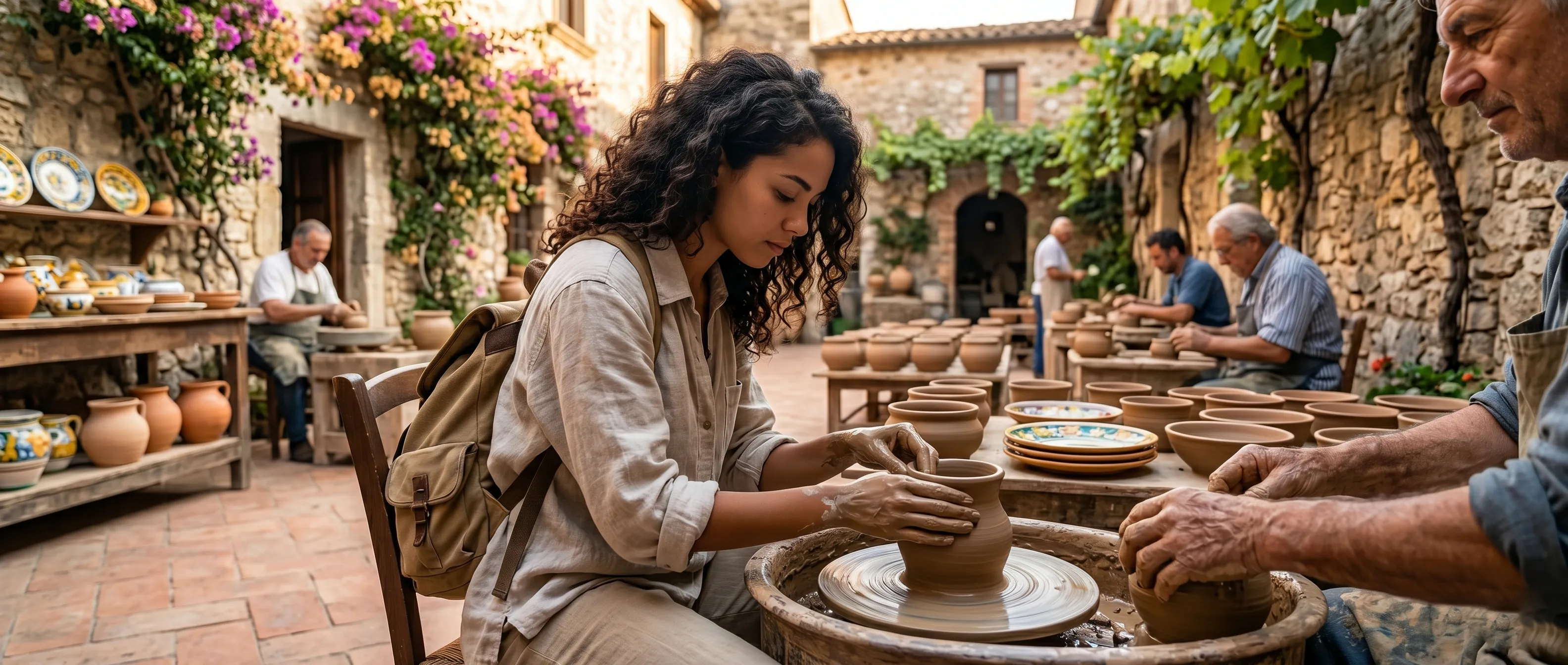
Independent travel in 2026 has evolved into a strategic “Educational Arbitrage,” where 76% of solo travelers now prioritize acquiring professional-grade skills over traditional sightseeing. By targeting “Second-City” hubs and leveraging micro-mastery workshops, first-timers can bypass the psychological barriers of “looking lonely” while building a high-value personal portfolio. This guide provides the technical roadmap to navigating global destinations with clinical confidence and social precision.
🚀 Key Takeaways
- The 76% Skill Pivot: Modern solo travel is defined by “Micro-Mastery Sprints,” with a 59% surge in bookings for technical workshops like fragrance blending or PADI certifications.
- Economic Arbitrage: Solo travelers spend an average of $2,100 on 12-day trips, but can offset the 30% “Solo Tax” by targeting high-value shared-interest hubs in Q2 2026.
- The 5-to-1 Social Ratio: Confidence is built through a structured ratio of five group-based skill sessions to every one day of solo exploration.
Our 2026 Independent Travel Index integrates the GetYourGuide 2026 Hidden Trends List and solo safety analytics from The Solo Travel Safety Index 2026. We filtered for “Skill-Seeker” data points and verified the 13% rise in solo-specific hotel filters to ensure real-world logistical accuracy.
The Rise of Educational Arbitrage in Solo Travel
The 2026 solo travel market is currently valued at $1.92 billion, driven by a 59% surge in travelers who view their journey as a “Micro-Mastery” opportunity. Independent travel is no longer a test of endurance; it is a calculated investment in one’s personal skill set. From mastering specialty coffee culture in Rome (up 54% in popularity) to intensive language immersion, the solo traveler is now a “Skill-Seeker” utilizing time autonomy to gain competitive life advantages.
The Shift from Souvenirs to Skills
Data from Q2 2026 reveals that 31% of Gen Z travelers would rather return home with a new certification than a physical souvenir. This shift has transformed how solo trips are planned. Instead of broad itineraries, travelers are booking 4-7 day windows focused on a single technical goal, such as a PADI Open Water course in Vietnam or a culinary workshop in Kyoto.
The “Third-Table” Informal Networking Strategy
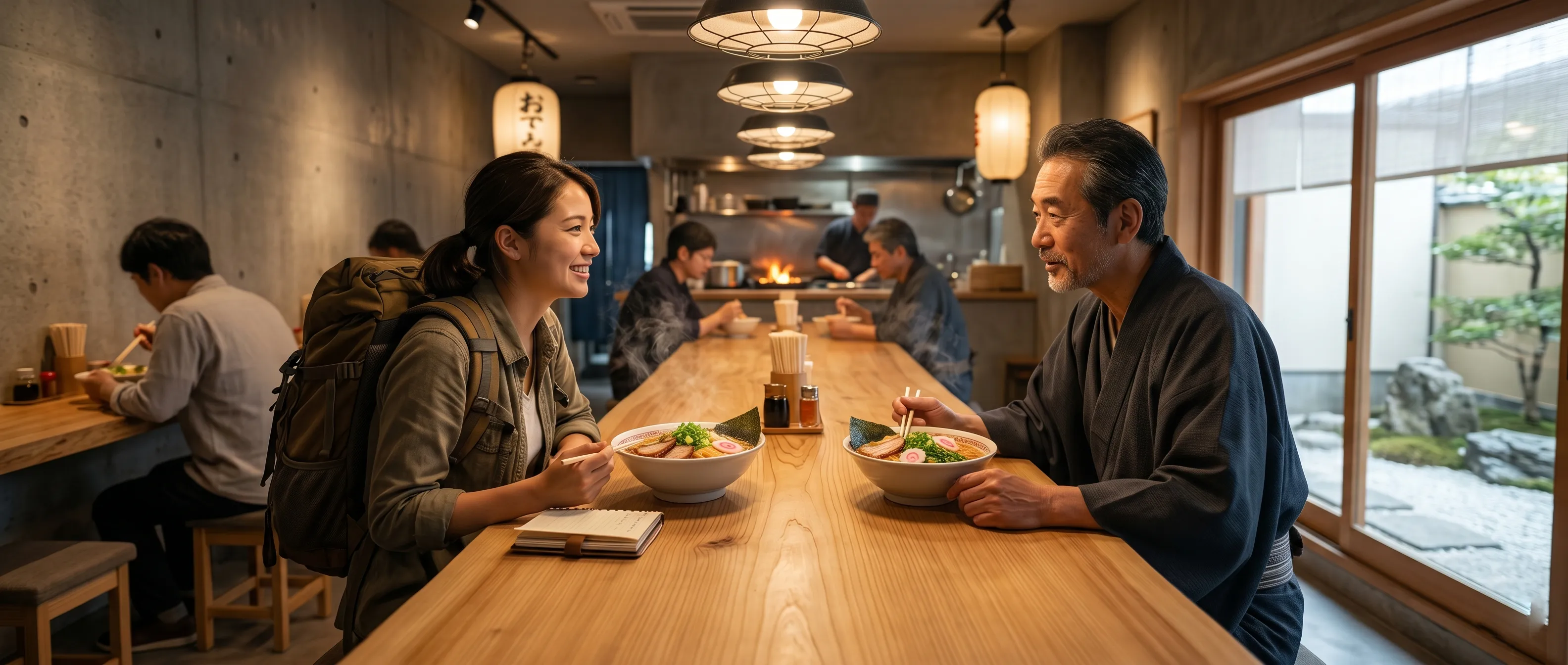
A critical 2026 sociological hack for the Social Seeker is the “Third-Table” strategy. By utilizing communal tables at high-end coffee roasteries or “one-person” ramen counters, solo travelers are engaging in informal networking. These hubs serve as low-pressure environments to exchange workshop recommendations and vet local guides, effectively turning a solitary meal into a high-yield information-gathering session.
Managing the Solo Tax and Economic Logistics
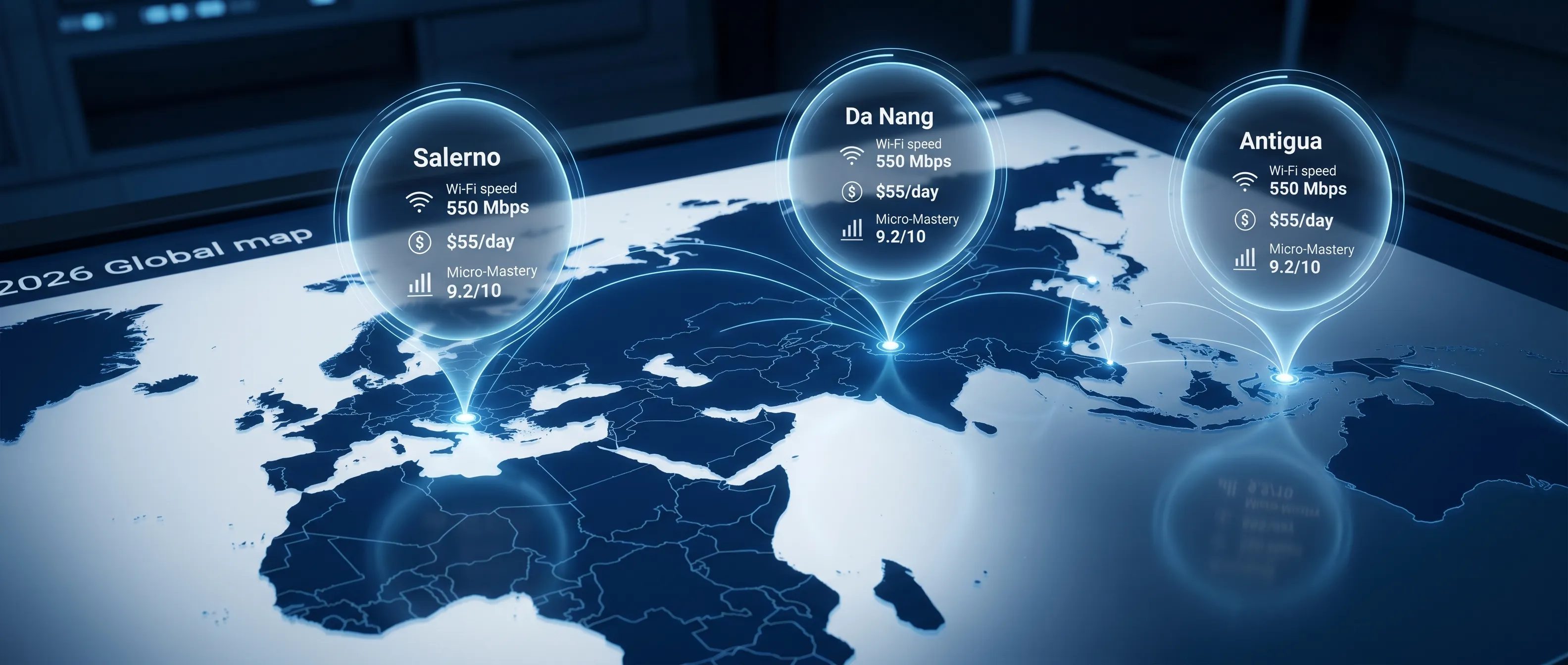
Solo travelers in 2026 face a mean “Single-Occupancy Tax” of approximately 30%, which requires a technical approach to budget distribution. By prioritizing “Second-City” hubs like Salerno, Italy or Da Nang, Vietnam, travelers can access the same high-tier micro-mastery workshops found in capitals but with a significantly lower baseline for accommodation and transport.
Leveraging Second-City Hubs
While major hubs like London or Tokyo have seen a record influx of travelers, “Second-Cities” offer a more manageable social scale. These locations provide the same fiber-optic speeds (averaging 150 Mbps) and safety infrastructure but at a 20-25% discount on daily survival costs. This allows solo travelers to reallocate their budget toward premium skill-based experiences.
| Destination | Daily Floor (USD) | Skill ROI | Safety Index | Wi-Fi Speed | Best Mastery |
|---|---|---|---|---|---|
| Salerno, IT | $85.00 | High | 7.87 | 100 Mbps | Gastronomy |
| Da Nang, VN | $32.00 | Extreme | 7.77 | 150 Mbps | PADI Diving |
| Kyoto, JP | $110.00 | Moderate | 7.92 | 200 Mbps | Craft/Artisan |
| Ljubljana, SI | $70.00 | High | 7.93 | 95 Mbps | Sustainability |
| Antigua, GT | $45.00 | Extreme | 6.50 | 40 Mbps | Language |
Psychology of Independent Mastery
Building solo confidence in 2026 is a mechanical process involving the 5-to-1 Social Ratio: five group-based mastery sessions for every one day of solo navigation. This structure prevents “solo fatigue” and ensures that the traveler remains socially integrated while maintaining their independence. Transitioning from “looking lonely” to “active engagement” is naturally achieved when the primary focus of the day is a technical task rather than aimless exploration.
Implementing the Safety Stack
Confidence is reinforced by a robust technical “Safety Stack.” Registering your itinerary through the STEP Enrollment Portal and maintaining a 12-hour check-in redundancy with a trusted contact provides the psychological safety net needed for deep immersion. In 2026, 76% of solo travelers report feeling safer than five years ago, largely due to the widespread adoption of these digital redundancies.
The Art of “Lore-Chasing”
Intentional independence is furthered by the trend of “Lore-Chasing”—traveling to specifically understand the traditions and cultural mechanics of a destination. By engaging with local experts for 1-on-1 sessions, solo travelers bypass the shallow “tourist bubble” and gain authoritative knowledge that builds genuine travel confidence.
"The destination is the means to an end. One that might start as a quick chat on a train platform and unfold into a night of laughter with people you'll never forget."
The Modular Final Verdict
Your 2026 solo journey should be selected based on the “Skill-to-Spend” ratio and the density of verified micro-mastery workshops in the area. If you are a first-timer seeking maximum safety and structured social entry, then Japan or Norway are the optimal choices. If you are an experienced traveler looking to maximize your educational ROI on a budget, then Vietnam or Nepal offer the highest yield.
- If you want high-tech infrastructure and safety: Then choose Japan or Singapore.
- If you want the best “Skill-to-Spend” ratio: Then choose Vietnam or Guatemala.
- If you prefer cultural immersion and craft: Then choose Italy or Uzbekistan.
Pros
- ✅ Rapid personal growth
- ✅ Full autonomy over itinerary
- ✅ Access to exclusive 2026 micro-mastery communities
Cons
- ❌ Single-occupancy surcharges (Solo Tax)
- ❌ Social-app fatigue
- ❌ Higher logistical overhead
Frequently Asked Questions: Independent Travel
Frequently Asked Questions
01 What are the best solo workshops for meeting people in 2026?
Culinary workshops, specialty coffee tastings, and PADI diving certifications are currently the top social entry points. These activities provide a structured, high-context environment that facilitates natural dialogue among solo travelers.
02 How can I avoid solo travel hotel surcharges?
Target 'Second-City' hubs or use 2026 solo-specific filters on booking platforms to find properties with single-occupancy pricing. Boutique shared-interest hubs often eliminate the traditional 30% single-supplement tax.
03 Which skills are best to learn on a solo trip in 2026?
Language immersion, local gastronomy, and high-altitude endurance training are trending. The 2026 'Skill-Seeker' prioritizes certifications and technical crafts that offer long-term personal or professional ROI.
04 What is the 5-to-1 social ratio for solo travelers?
This ratio suggests scheduling five group-based activities for every one day of solo exploration. This balanced approach maintains high social engagement while allowing for the personal reflection inherent in solo travel.
05 How do I use the Third-Table strategy to meet people?
Identify venues with communal tables or counter seating, such as specialty roasteries. These physical layouts are designed for solo diners and act as informal networking zones for exchanging travel tips.
06 Is solo travel safety improving in 2026?
Yes, 76% of solo travelers report improved safety outcomes. This is attributed to the rise of verified safety apps like NomadHer, digital 'Safety Stacks,' and increased industry focus on solo-friendly infrastructure.
David Al-Fayed
Culture Code Cracker
Bridging regional gaps with hard hitting local cultural intelligence.