
Minimalist Packing Tips: Seamless Travel for Flexi-Workers

Unlocking Agility: The Flexi-Worker’s Guide to Seamless Minimalist Travel
Minimalist packing is a strategic imperative for the modern flexi-worker. It mitigates logistical friction and ensures immediate operational readiness upon arrival in any global co-working space. This methodology optimizes travel efficiency, preventing productivity drains associated with lost luggage or excessive baggage.
The operational paradigm for a Digital Nomad necessitates a carry-on only approach to maintain peak agility. The average carry-on weight has increased by 3 pounds since 2021, often due to flexi-workers overcompensating for potential travel disruptions Source 1. This trend hinders true mobility and immediate work readiness.
Adherence to airline specifications, such as the standard carry-on dimension of 22 x 14 x 9 inches (56 x 36 x 23 cm), is critical for avoiding gate-check delays Source 2. The TSA 3-1-1 rule mandates liquids be in containers of 3.4 oz (100 ml) or less, a non-negotiable for expedited security processing Source 3.
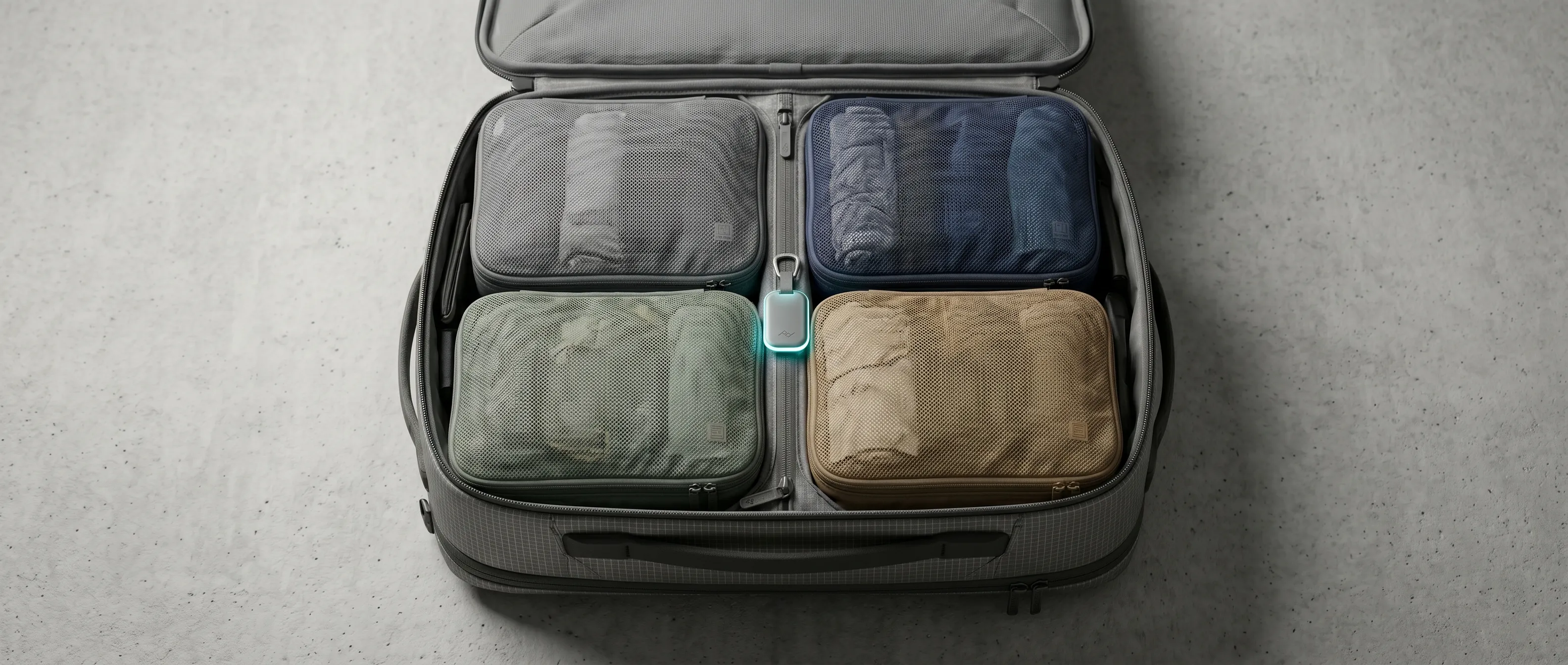
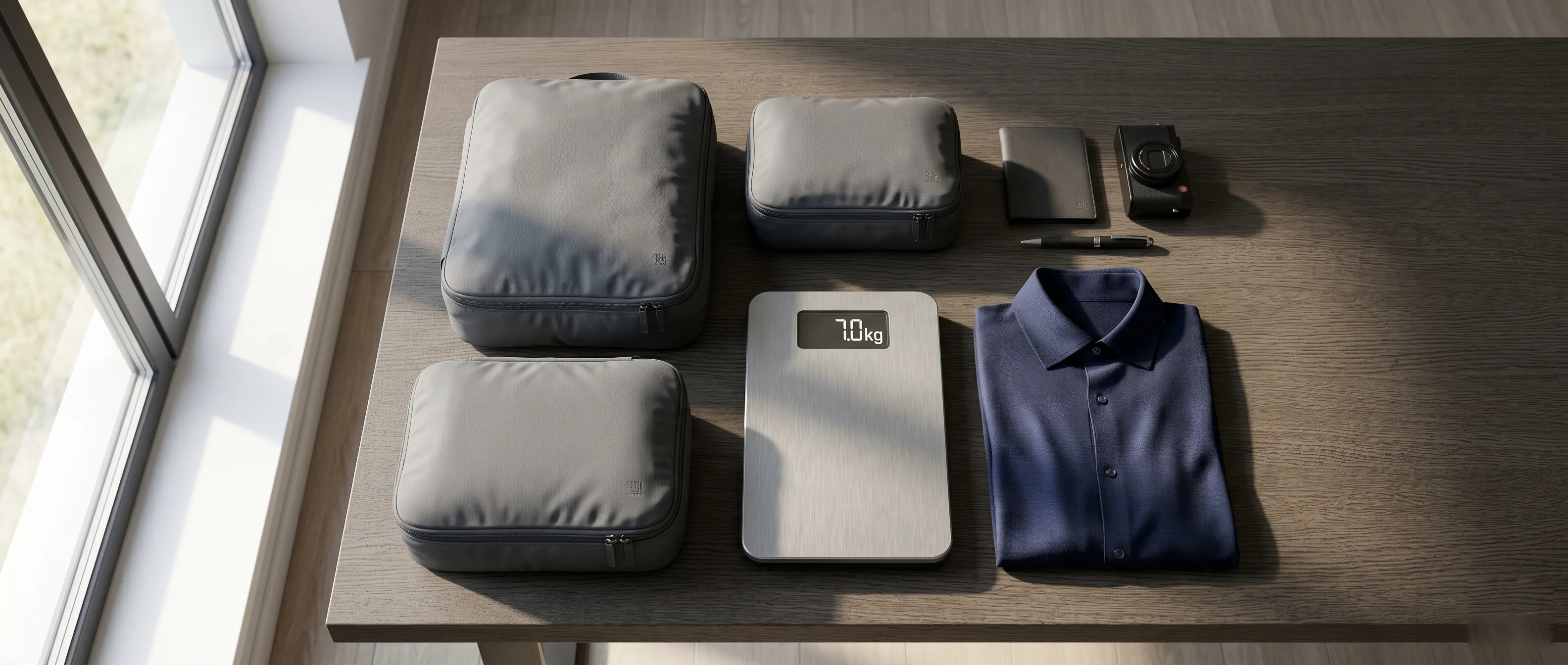
Implementing a capsule wardrobe and utilizing packing cubes can significantly reduce bulk. This ensures the average weight of carry-on luggage remains below the 17 pounds (7.7 kg) threshold, or the 15 to 22 pounds (7-10 kg) imposed by many international carriers Source 4.
Key Takeaways
- Minimalist packing enhances flexi-worker productivity by eliminating travel-related logistical delays.
- Adherence to carry-on dimensions and weight limits (e.g., 22x14x9 inches, 15-22 lbs) is crucial for operational efficiency.
- Strategic packing, including capsule wardrobes and TSA 3-1-1 compliance, prevents common travel friction points.
Our analysis is predicated on logistical efficiency metrics, airline regulatory compliance, and documented productivity impacts on remote workforces. Data points were cross-referenced with industry standards for baggage handling and security protocols.
The Productivity Payoff: Why Less Luggage Means More Output
The Hidden Drain: How Overpacking Impacts Remote Work Efficiency
Excess baggage introduces significant logistical friction, directly impeding a Digital Nomad’s operational readiness. The physical burden and time expenditure associated with managing multiple bags detract from immediate work integration upon arrival.
An estimated 4,500 passengers are injured yearly by falling luggage on U.S. airlines, underscoring the inherent risks of over-encumbrance.
This operational overhead can delay access to essential tools or a co-working space, thereby extending the non-productive phase of a travel transition. Adopting a carry-on only strategy mitigates these delays, ensuring critical assets remain within direct control and accessible.
Debunking the Myth: The Average Carry-On Weight Paradox
Despite the push for agility, the average weight of carry-on luggage is approximately 17 pounds (7.7 kg), often pushing against airline limits. Many international carriers impose carry-on weight restrictions ranging from 15 to 22 pounds (7-10 kg), creating potential gate-check scenarios.
This paradox, where flexi-workers overcompensate for perceived travel disruptions, ironically hinders true agility and immediate work readiness.
The increased weight can lead to physical strain and slower transit through terminals, impacting energy levels required for sustained output. Streamlining luggage weight is a critical component of maintaining peak operational efficiency while traveling.
Strategic Decluttering: Preventing Lost Luggage Productivity Drains
Strategic decluttering is a preventative measure against the productivity drains associated with lost or delayed luggage. Implementing a capsule wardrobe and utilizing packing cubes optimizes space and organization, ensuring all essentials are accounted for.
This systematic approach minimizes the risk of critical items being misplaced or inaccessible.
Adherence to regulations like the TSA 3-1-1 rule, which mandates liquids be in containers of 3.4 oz (100 ml) or less, further streamlines security processes.
A universal travel adapter and an RFID-blocking wallet are examples of minimalist, high-impact items that prevent common travel disruptions, as detailed by travel security protocols here.
This proactive methodology ensures immediate work readiness upon arrival, even in remote global hubs as discussed in travel efficiency guides. Minimizing baggage volume also reduces the probability of items being separated from the traveler during transfers, a common cause of productivity loss according to logistics analyses.
| Variable | Overpacked Travel State | Minimalist Travel State | Productivity Implication |
|---|---|---|---|
| Check-in/Security | Extended queue times, potential bag checks | Expedited processing, direct security passage | Reduced pre-flight operational delays |
| On-arrival Readiness | Delayed access to essentials, unpacking overhead | Immediate access to tools, rapid setup | Accelerated transition to active work phase |
| Physical Burden | Increased fatigue, mobility constraints | Enhanced mobility, reduced physical stress | Sustained energy levels for cognitive tasks |
| Risk of Loss/Delay | Higher probability of checked luggage issues | Near-zero risk of critical item separation | Minimized disruption from lost work-critical equipment |
| Airline Compliance | Potential for overweight fees or gate-checking | Consistent adherence to 22 x 14 x 9 inches standards | Avoidance of unforeseen costs and logistical complications |
Curating Your Mobile Office: Essential Tech & Wardrobe for Digital Nomads
Establishing an efficient mobile office necessitates a strategic approach to both technology and apparel, optimizing for portability and functionality. This systematic curation directly supports the Digital Nomad paradigm, ensuring operational readiness across diverse global environments.
Mastering the TSA 3-1-1 Rule: Liquids and Carry-On Compliance
Adherence to the TSA 3-1-1 rule is a foundational component of carry-on only travel logistics. This regulation mandates that all liquids, aerosols, gels, creams, and pastes must be in containers of 3.4 oz (100 ml) or less.
These containers must fit into one clear, quart-sized bag, with each passenger limited to one such bag Source: TSA Guidelines. Strict compliance prevents security delays and ensures seamless transit through checkpoints.
Building a Versatile Capsule Wardrobe for Global Hubs
A capsule wardrobe represents a modular clothing system, designed for maximum versatility with minimal items. This approach is critical for maintaining a carry-on only status, especially given that most airlines adhere to a standard carry-on dimension of 22 x 14 x 9 inches (56 x 36 x 23 cm).
Strategic selection of interchangeable garments, often facilitated by packing cubes, allows for diverse outfit configurations suitable for both professional co-working space environments and casual exploration Source: Minimalist Travel Strategies. This method directly addresses the challenge of many international carriers impos[ing] carry-on weight restrictions ranging from 15 to 22 pounds (7-10 kg).
Powering Your Journey: Essential Tech for the Remote Professional
The Digital Nomad requires a robust yet compact technological infrastructure. Key components include a lightweight laptop, noise-canceling headphones, and a universal travel adapter to ensure connectivity across various power grids.
A portable power bank is also essential for maintaining device charge during transit or in remote locations. The average weight of carry-on luggage is approximately 17 pounds (7.7 kg), underscoring the necessity of selecting lightweight tech to remain within airline limits.
An RFID-blocking wallet provides a critical layer of data security for financial instruments.
Optimizing your tech load minimizes physical burden and enhances operational agility Source: Remote Work Efficiency.
Smart Packing Strategies: Maximizing Space and Minimizing Stress
"Efficient packing is not merely about fitting items; it's about engineering a portable system that supports continuous productivity and minimizes operational downtime."
The Art of Compression: Rolling, Folding, and Packing Cubes
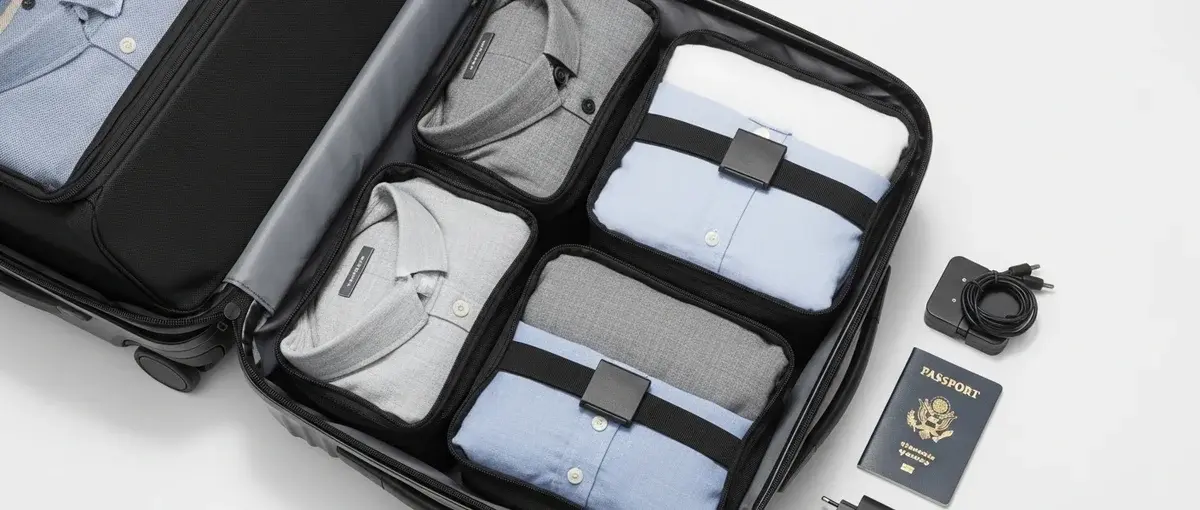
Strategic garment management is fundamental to maximizing carry-on capacity. Rolling soft, unstructured items like t-shirts and synthetics can significantly reduce volume and minimize creasing. Conversely, folding more structured garments, such as blazers or dress shirts, helps maintain their form and prevents excessive wrinkling.
The deployment of packing cubes provides a modular system for compartmentalization and compression, allowing for a highly organized capsule wardrobe within the carry-on only framework. This systematic approach assists in adhering to standard carry-on dimensions, typically 22 x 14 x 9 inches (56 x 36 x 23 cm) for most airlines, as detailed by industry guidelines.
Universal Adapters & RFID Protection: Safeguarding Your Essentials
For the Digital Nomad, a universal travel adapter is an indispensable tool, ensuring connectivity across diverse electrical grids without the need for multiple, bulky converters. This single device streamlines the power management aspect of a minimalist tech setup.
Furthermore, securing personal data is paramount, making an RFID-blocking wallet a critical component for protecting sensitive information from electronic theft
Compliance with the TSA 3-1-1 rule is also non-negotiable for liquids, requiring containers of 3.4 oz (100 ml) or less, all fitting into a single quart-sized bag. This regulation directly impacts the selection of toiletries and ensures a smooth security checkpoint experience.
Pre-Departure Checklist: Ensuring Immediate Work Readiness
A rigorous pre-departure checklist is vital for guaranteeing immediate work readiness upon arrival at any global hub or co-working space. This involves verifying all essential semantic_entities such as laptops, chargers, and portable power banks are packed and fully charged.
Confirming adherence to airline-specific carry-on weight restrictions, which often range from 15 to 22 pounds (7-10 kg), prevents last-minute gate-check scenarios
Organizing travel documents, including digital copies, and confirming accommodation details are also critical steps. This proactive approach minimizes stress and allows the Digital Nomad to transition directly into productive work without logistical delays.

Your Blueprint for Unburdened Travel: The Final Verdict
Pros
- ✅ Enhanced Mobility: Reduces physical load, enabling faster transit through terminals and urban environments.
- ✅ Reduced Risk Profile: Eliminates checked baggage, mitigating the probability of lost luggage and associated productivity delays for a Digital Nomad.
- ✅ Operational Efficiency: Streamlines packing and unpacking processes, conserving time and mental bandwidth.
- ✅ Cost Optimization: Avoids checked bag fees, contributing to a more efficient travel budget.
Cons
- ❌ Limited Versatility: Restricts wardrobe options, potentially impacting professional presentation in diverse contexts.
- ❌ Initial Investment: Requires strategic acquisition of multi-functional, high-quality items for a Capsule wardrobe.
- ❌ Capacity Constraints: Adherence to Carry-on only dimensions (e.g., 22 x 14 x 9 inches or 56 x 36 x 23 cm) can be challenging for extended trips.
- ❌ Pre-trip Planning Intensity: Demands meticulous pre-departure planning to ensure all essentials are accounted for.
The strategic adoption of minimalist packing principles represents a critical operational upgrade for the modern flexi-worker. This methodology directly addresses the logistical complexities of frequent travel, ensuring immediate functional readiness upon arrival.
Adherence to airline carry-on weight restrictions, often ranging from 15 to 22 pounds (7-10 kg), is paramount for seamless transit.
Implementing a system of Packing cubes can further optimize internal luggage volume and item accessibility This structured approach minimizes the potential for disruption, a key concern given that an estimated 4,500 passengers are injured yearly by falling luggage on U.S. airlines.
Equipping oneself with a Universal travel adapter and pre-identifying local Co-working space options further solidifies a robust travel infrastructure The objective is to achieve a state of operational readiness, irrespective of geographical coordinates.
Modular Final Verdict
- If your travel frequency is high and operational agility is paramount, then adopting a minimalist packing strategy is a non-negotiable optimization.
- If you prioritize immediate work readiness and wish to mitigate travel-related stressors, then a Carry-on only approach with a curated Capsule wardrobe is essential.
- If you seek to reduce financial expenditure on baggage fees and enhance personal mobility, then strict adherence to minimalist principles will yield tangible benefits.
- If your professional activities demand a consistent, reliable setup across diverse locations, then integrating multi-functional items and a Universal travel adapter into your minimalist kit is critical.
Frequently Asked Questions
01 What is the 3-1-1 rule for liquids in carry-on luggage?
The TSA's 3-1-1 rule requires each liquid container to be 3.4 oz (100 ml) or less, all fitting into one clear, quart-sized bag, with one bag allowed per passenger.
02 What are the standard carry-on luggage dimensions for most airlines?
Most airlines follow a standard of 22 x 14 x 9 inches (56 x 36 x 23 cm), including handles and wheels, though it's crucial to check specific airline policies.
03 How can minimalist packing boost productivity for remote workers?
Minimalist packing reduces stress, saves time on unpacking/repacking, and ensures essential work tools are always accessible, allowing for immediate work readiness and focus.
04 What is the 3-5-7 packing rule for travel?
The 3-5-7 packing rule is a minimalist strategy suggesting 3 bottoms, 5 tops, and 7 days' worth of essentials (like underwear) to create versatile outfits with fewer items.
05 What tech essentials should a digital nomad pack minimally?
Essential tech includes a lightweight laptop (e.g., MacBook Air), noise-canceling headphones, a universal travel adapter, a portable power bank, and an electronic organizer.
06 Is it better to roll or fold clothes when packing a suitcase?
It's best to combine both: roll casual items like t-shirts and synthetics to save space and reduce wrinkles, and fold bulkier or structured clothes to maintain their shape.

Kenji Sato
Travel Finance Optimizer
Hacking global travel cycles through ruthless precision forecasting.