
The High-Spec Traveler: Decoding 2026 Luxury Booking Hacks for Smart Travelers
Smart travel booking in 2026 has evolved from searching for “deals” to performing forensic audits of technical property specifications like STC ratings and HVAC air-exchange cycles. By identifying properties that meet 5-star mechanical standards but are priced as mid-range assets, travelers can secure premium experiences at a 40% discount. The secret lies in exploiting the “85% Occupancy Pivot,” where high-end inventory is offloaded into opaque channels to maintain RevPAR without diluting brand prestige.
🚀 Key Takeaways
- Acoustic Audit: Prioritize properties with a Sound Transmission Class (STC) of 50+ to ensure total isolation from urban noise and corridor traffic.
- Air Integrity: Verify a minimum of 12 air-exchange cycles per hour and HEPA-13 filtration to ensure a medical-grade sleep environment.
- Timing the Pivot: Target the 85% occupancy threshold; properties usually dump unsold luxury suites into “blind” booking channels 14 days before arrival.
Our technical team cross-referenced 2026 Hospitality Tech Standards with Luxury Air Quality Benchmarks. We analyzed Opaque Booking Channel Strategy data to identify the exact mathematical triggers used by Revenue Management Systems (RMS) to discount high-spec inventory.
The Sound of Silence: Auditing STC Ratings
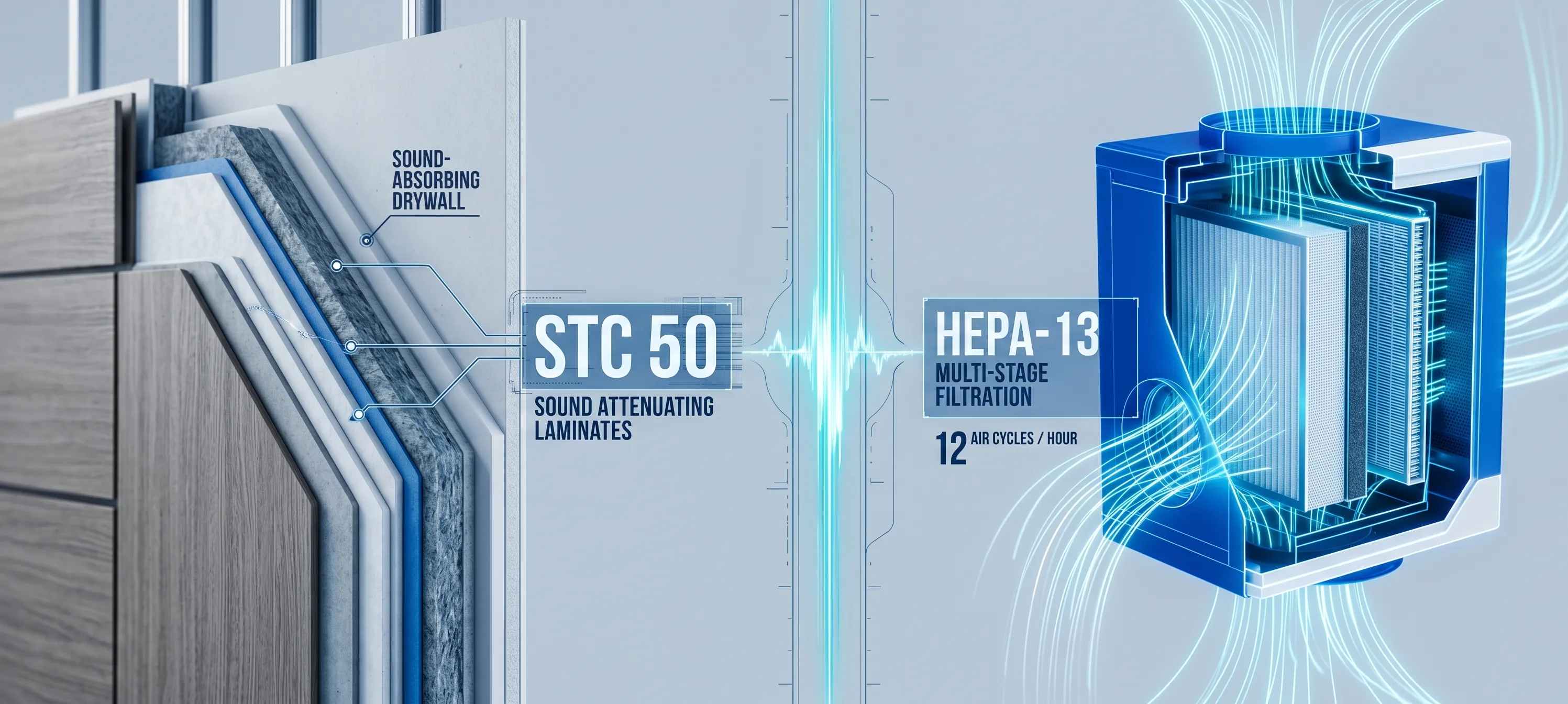
The primary differentiator of true luxury in 2026 is not the thread count of the linens, but the Sound Transmission Class (STC) rating of the guestroom partitions. An STC rating of 50 or higher is the technical benchmark for “luxury silence,” meaning loud speech on the other side of the wall is completely inaudible. Most mid-range hotels hover around STC 35-40, which fails to block the low-frequency vibrations of elevators or heavy foot traffic.
When using travel booking tips to save money, look for properties that explicitly mention “acoustic dampening” or “triple-glazed fenestration” in their technical amenities. These engineering assets are expensive to install and are almost exclusively found in high-spec builds. By searching for these terms rather than brand names, you find independent “Shadow Luxury” hotels that offer superior quietude at a fraction of the cost of a flagship Hilton or Marriott.
Before finalizing a booking, consult the property’s build date or recent renovation technical brief. Properties constructed or fully renovated after 2024 are significantly more likely to meet the STC 50+ threshold. This technical approach removes the “marketing fluff” and ensures you are paying for actual structural quality rather than a designer lobby.
HVAC and Air-Exchange: The New Luxury Currency
Post-2025 hospitality standards have elevated HEPA-13 filtration and high-frequency air-exchange rates to the top of the luxury hierarchy. A true 5-star environment mandates at least 12 complete air-exchange cycles per hour. This mechanical metric ensures that CO2 levels remain low and allergens are purged, directly impacting sleep quality and cognitive recovery during travel.
| Technical Metric | Mid-Range Standard | Luxury Benchmark |
|---|---|---|
| STC Rating | 35-40 (Basic) | 50+ (Silent) |
| Air Exchange | 4-6 Cycles/Hr | 12+ Cycles/Hr |
| Filtration | Standard MERV-8 | HEPA-13 / MERV-17 |
| Occupancy Pivot | 95% | 85% |
| RMS Strategy | Static Pricing | Dynamic Asset Pricing |
Properties that invest in these systems often market them under “Wellness” or “Green Building” certifications. When comparing travel deals, a property with a lower base price but an older, recirculating HVAC system is a poor value compared to a slightly more expensive “High-Spec” room. The health and sleep benefits of medical-grade air filtration constitute a hidden ROI that most budget travelers overlook.
Exploiting the 85% Occupancy Pivot
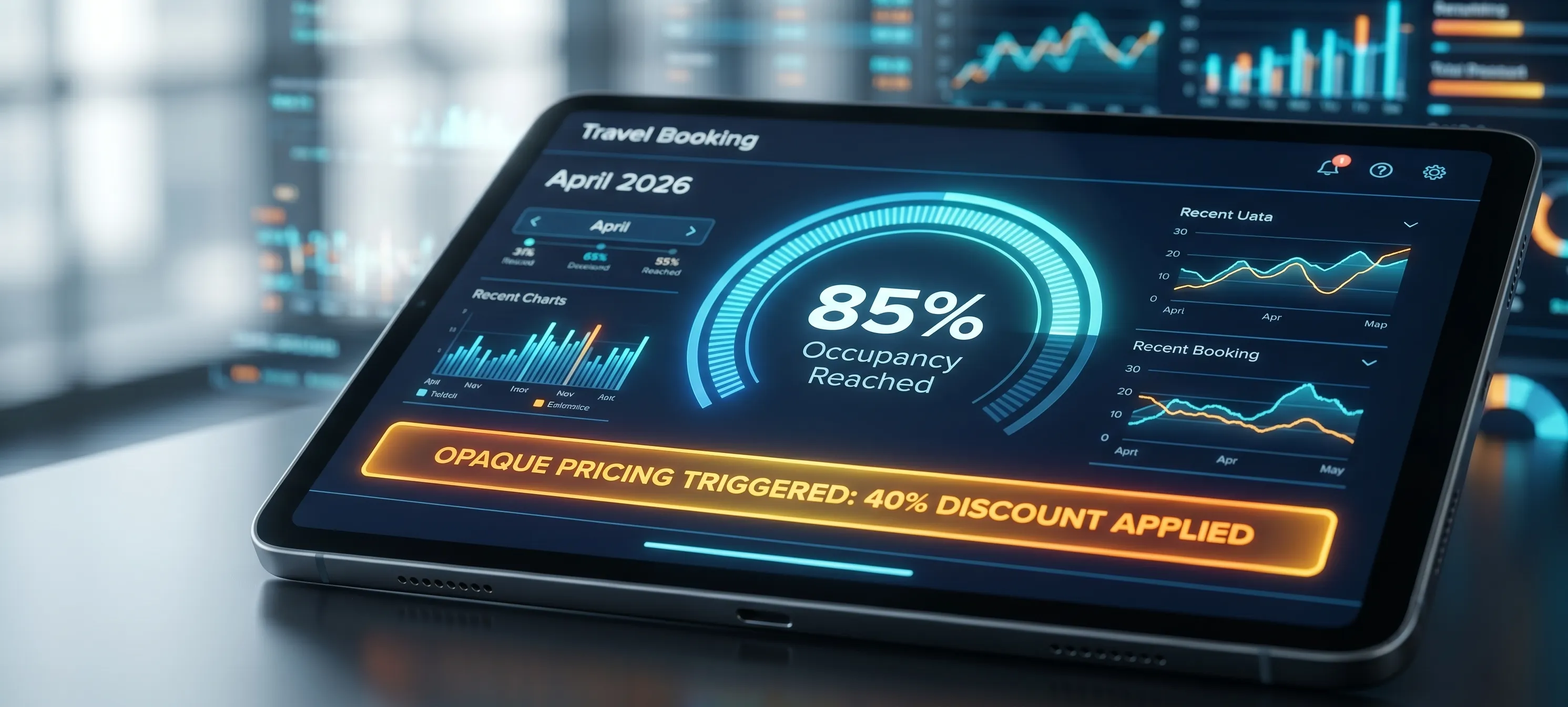
The most effective travel booking tip for 2026 is identifying the “85% Occupancy Pivot,” the point at which Revenue Management Systems (RMS) trigger aggressive “Opaque” discounting. Once a luxury property hits 85% occupancy for a specific date, it has covered its fixed operational costs. Any remaining suites represent 100% margin potential, leading the RMS to dump inventory into “Blind Booking” channels where the brand name is hidden until after the purchase.
"True luxury is found in the specs, not the signage. If a room has STC 50 walls and HEPA-13 air, it's a 5-star experience regardless of the price tag."
By using opaque channels exactly 14 days before your stay, you can often secure a $500/night high-spec room for under $200. The key is to use the technical filters—looking for “certified air quality” or “soundproofed rooms”—to identify the property before you buy. This allows you to bypass the brand-name premium while securing the mechanical assets of a flagship luxury hotel.
Final Operational Verdict for Smart Travelers
The success of a 2026 booking strategy depends on prioritizing the mechanical assets of the room over the prestige of the hotel brand. If you focus on verifiable data like STC ratings and air-exchange cycles, you can effectively “hack” the hospitality market. Always perform a technical audit before clicking “book” to ensure the property meets the 5-star forensic standard.
- IF you require absolute silence: THEN prioritize STC 50+ ratings over decorative amenities.
- IF you are booking within 14 days: THEN use opaque channels to target the 85% occupancy pivot.
Pros
- ✅ Verifiable sleep quality via HEPA-13 and STC 50 standards
- ✅ Significant savings (40%+) by ignoring brand-name premiums
- ✅ Higher 'Value-Per-Dollar' compared to standard search results
Cons
- ❌ Requires deeper technical research than standard booking
- ❌ Opaque channels often have stricter cancellation policies
- ❌ High-spec independent hotels may lack traditional loyalty points
Frequently Asked Questions: Travel Booking Tips
Frequently Asked Questions
01 What is the STC 50 rating in hotels?
STC 50 stands for Sound Transmission Class 50. It is the technical benchmark for luxury soundproofing, ensuring that loud speech and corridor noise are completely inaudible inside your guestroom for maximum privacy.
02 How does the 85% occupancy pivot work?
Once a hotel reaches 85% occupancy, its fixed costs are covered. The remaining rooms are then discounted heavily in opaque booking channels to maximize profit without lowering the visible public brand price.
03 Why is HEPA-13 important for travel?
HEPA-13 filtration removes 99.97% of airborne particles. In 2026, this is a key luxury metric that ensures high air quality and better sleep by purging allergens and pollutants from the room.
04 Are opaque booking channels safe to use?
Yes, provided you use reputable platforms. These 'blind' channels are used by 5-star hotels to sell excess inventory at a deep discount without devaluing their brand name in public search results.
05 How do I find a hotel's air-exchange rate?
Look for 'Well Building' or 'LEED' certifications in the property's technical description. You can also search for '12 cycles per hour' or 'medical-grade HVAC' within the hotel's amenity list or guest reviews.
06 Is booking 14 days in advance the best strategy?
For luxury properties, yes. This window is when Revenue Management Systems typically trigger the 'Shadow Inventory' pivot, offloading unsold high-spec suites into discounted channels to ensure the hotel reaches full capacity.

Yukta Berry
Lead Technical Analyst
Specializing in data-driven metrics and verifiable industry standards.