
Visa Rejection Reasons: Avoid Common Mistakes
Navigating the Labyrinth: Understanding Crucial Visa Rejection Reasons
Visa rejections occur when an applicant fails to establish eligibility under the Immigration and Nationality Act (INA) or is found inadmissible based on legal grounds. These are formal denials by a U.S. consular officer, often stemming from incomplete documentation, misrepresentation, or an inability to prove category criteria.
Key Takeaways
- Visa rejections are formal denials based on an applicant’s inability to meet specific legal criteria under the Immigration and Nationality Act (INA).
- Official U.S. visa refusal statistics underwent a significant methodology change post-Fiscal Year (FY) 2019, impacting direct comparisons with prior periods.
- Thorough preparation and understanding visa category requirements are essential to mitigate common visa mistakes and avoid refusal.
Understanding crucial visa rejection reasons is paramount for any applicant navigating the complex immigration framework. These visa refusal causes often stem from an applicant’s inability to satisfy the requirements of the Immigration and Nationality Act (INA) or specific grounds of ineligibility.
Avoiding common visa mistakes requires meticulous preparation and a clear understanding of the application process. The Department of Homeland Security (DHS) and U.S. Citizenship and Immigration Services (USCIS) oversee various aspects of immigration, while the Department of State publishes the Report of the Visa Office.
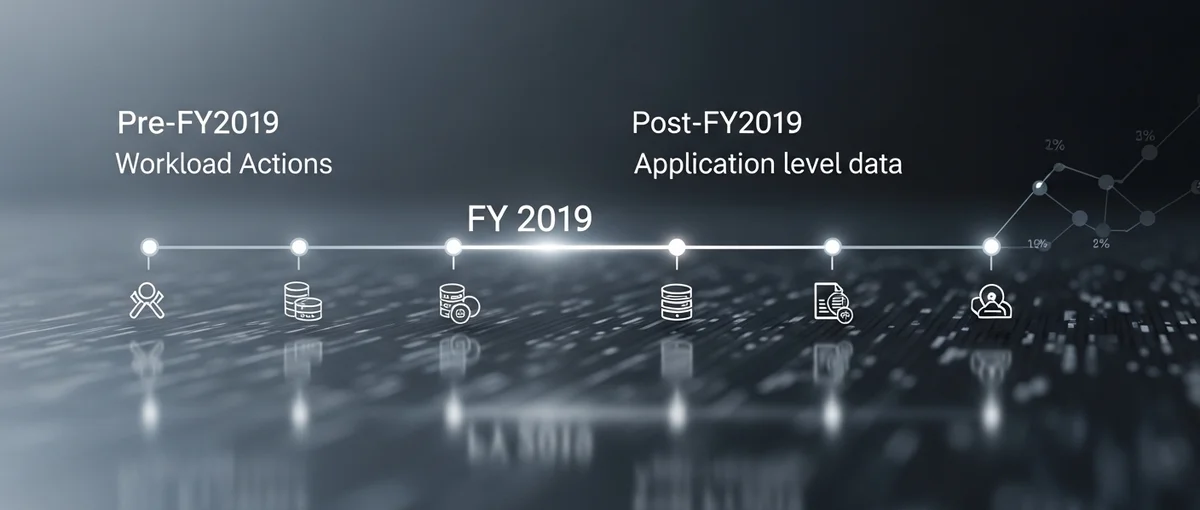
Notably, refusal statistics for Nonimmigrant Visas (NIV) underwent a significant methodology change post-Fiscal Year (FY) 2019, shifting from workload actions to application-level data. This means direct comparisons with pre-FY2019 data are less straightforward, as highlighted in official reports detailing monthly nonimmigrant visa issuances.
For instance, the Visa Waiver Program allows stays of 90 days or less for eligible nationals, but even these travelers must meet strict criteria. While worldwide visa refusal rates are often less than one percent for issued visas, the specific reasons for denial are critical for individual applicants. This statistical evolution, effective from November 1, 2023, for data collection spanning FY2006-FY2025, underscores the need for precise data interpretation. For those wondering how to apply for a visa, understanding these nuances is a foundational step.

Decoding Visa Ineligibility: The Immigration and Nationality Act
The Immigration and Nationality Act (INA) serves as the foundational legislative framework governing all U.S. immigration processes, outlining the criteria for both eligibility and ineligibility for various visa classifications. Understanding these statutory provisions is critical to mitigating common visa rejection reasons and avoiding significant visa mistakes.
The INA specifies numerous grounds for visa refusal causes, ranging from health-related issues and criminal history to security concerns and previous immigration violations. Each Nonimmigrant Visa (NIV) and Immigrant Visa (IV) application undergoes an assessment against these established legal parameters.
Applicants must affirmatively demonstrate their eligibility, as the burden of proof rests entirely with them.
The Department of Homeland Security (DHS) and U.S. Citizenship and Immigration Services (USCIS) operate within the strictures of the INA to process applications and adjudicate cases. Consular officers, acting under the authority of the INA, are mandated to refuse a visa if an applicant fails to meet any eligibility requirement or falls under a specified ground of ineligibility.
While the worldwide refusal rate for some categories can be less than one percent worldwide, individual circumstances significantly impact outcomes.
The methodology for tracking visa data has undergone revisions, particularly impacting comparisons with historical records. The Report of the Visa Office provides statistical information, but its interpretation requires an understanding of these changes.
For instance, those seeking to understand tourist visa requirements 2026 should consult current guidelines, acknowledging that data collection has evolved.
| Data Metric | Pre-Fiscal Year (FY) 2019 Methodology | Post-Fiscal Year (FY) 2019 Methodology |
|---|---|---|
| Data Collection Basis | Workload Actions | Application-Level Data |
| Granularity of Outcomes | Less Direct | More Accurate Reflection of Final Outcomes |
| Comparability with Current Data | Not Directly Comparable | Basis for Current Statistical Analysis |
The shift in data collection, initiated in Fiscal Year (FY) 2019, moved from counting workload actions to reflecting access to application-level data. This change provides a precise representation of final visa application outcomes, though it complicates direct comparisons with pre-FY2019 statistics.
For comprehensive U.S. visa statistics, official Department of State resources provide reports.
The Shifting Sands of Visa Statistics: Post-FY2019 Methodology
The analytical framework for U.S. visa statistics underwent a recalibration beginning in Fiscal Year (FY) 2019. This methodological shift transitioned from a workload action-based counting system to an application-level data approach.
Consequently, direct comparative analysis of visa rejection reasons and overall visa refusal causes between pre-FY2019 and post-FY2019 periods is not statistically robust.
This change provides a precise reflection of final outcomes within the visa application process, offering clarity on individual Nonimmigrant Visa (NIV) and Immigrant Visa (IV) adjudications. The Department of State’s Report of the Visa Office now leverages this data collection, impacting how trends in visa mistakes and denials are interpreted.
For instance, understanding adjusted refusal rates for specific visa categories, such as the Nonimmigrant B-visa, requires careful consideration of this updated methodology, as detailed in official reports Nonimmigrant B-Visa Adjusted Refusal Rates.
The revised data architecture, implemented from FY2019, means that aggregating monthly issuance reports from FY 2020 onwards will not yield an accurate fiscal year total if compared to prior periods. This operational adjustment is critical for any entity performing longitudinal studies on visa issuance and refusal patterns.
Applicants seeking to understand the process, including how to avoid common visa mistakes, can find foundational guidance in resources like a visa guide for beginners approval.
Beyond the Numbers: Common Pitfalls and the Visa Waiver Program
While official U.S. visa refusal statistics underwent a significant methodology change post-Fiscal Year (FY) 2019, shifting from workload actions to application-level data, understanding common visa rejection reasons remains critical. These qualitative factors often transcend numerical reporting, highlighting systemic visa mistakes applicants frequently make.
A primary pitfall involves failing to demonstrate non-immigrant intent for a Nonimmigrant Visa (NIV), a core requirement under the Immigration and Nationality Act (INA). This can manifest as insufficient ties to one’s home country or an inability to articulate the purpose and duration of the intended U.S. visit.
Incomplete or inconsistent documentation also constitutes a major visa refusal causes, often leading to administrative processing delays or outright denial.
"The integrity of the U.S. visa system relies on applicants demonstrating clear eligibility under the Immigration and Nationality Act. Any discrepancy or failure to meet the stipulated criteria constitutes a fundamental basis for refusal."
The Visa Waiver Program offers an alternative for eligible nationals, permitting stays of 90 days or less for tourism or business without requiring a traditional visa. However, even participants in this program must adhere to strict entry requirements and may be denied entry by Department of Homeland Security (DHS) officials if deemed inadmissible.
For those navigating the complex application process, reviewing visa interview tips secure approval can significantly mitigate potential issues.
Further details on official U.S. nonimmigrant visa statistics are available for reference.
While the overall refusal rate for certain categories can be less than one percent worldwide, individual application scrutiny remains rigorous.
Your Path Forward: Overcoming Visa Refusals and Ensuring Success
Navigating the complexities of visa applications requires meticulous attention to detail to mitigate potential visa rejection reasons. Understanding common visa refusal causes and proactively addressing potential visa mistakes is paramount for a successful outcome.
Applicants must adhere strictly to the provisions of the Immigration and Nationality Act (INA) and specific guidelines set forth by the Department of Homeland Security (DHS) and U.S. Citizenship and Immigration Services (USCIS). While overall visa refusal rates vary, certain specific procedural errors lead to refusal in less than one percent worldwide of all cases, indicating their infrequent occurrence when proper documentation is submitted.
For comprehensive statistical data, the Immigrant Visa Statistics from the Report of the Visa Office provide useful insights into both Immigrant Visa (IV) and Nonimmigrant Visa (NIV) issuances. For those planning short-term travel, such as 2 day trip ideas smart stress free escapes, understanding the specific requirements for stays of 90 days or less is crucial. The methodology for tracking visa data underwent significant changes post-Fiscal Year (FY) 2019, making direct comparisons with data from prior periods (e.g., FY2006-FY2025 projections) challenging, as noted in updates as recent as November 1, 2023.
Pros
- ✅ Proactive Preparation: Thorough documentation and understanding of eligibility criteria significantly reduce the likelihood of visa refusal.
- ✅ Appeal Mechanisms: For certain visa rejection reasons, avenues for appeal or reapplication exist, allowing for the submission of additional evidence.
- ✅ Clear Guidelines: Official resources provide explicit requirements, enabling applicants to systematically prepare their case.
Cons
- ❌ Time Investment: Overcoming a visa refusal can be a lengthy process, requiring substantial time for reapplication or appeal.
- ❌ Financial Implications: Additional fees may be incurred for new applications or legal assistance following an initial refusal.
- ❌ Uncertainty: Despite best efforts, a successful outcome is not guaranteed, leading to potential travel plan disruptions.
Modular Final Verdict
- If an applicant identifies a correctable error in their initial submission, then they should gather all supplementary documentation and reapply.
- If the visa refusal causes are related to ineligibility under the Immigration and Nationality Act, then seeking legal counsel for a comprehensive review of the case is advisable.
- If the refusal stems from a lack of clear intent for a Nonimmigrant Visa (NIV), then the applicant must provide stronger evidence of non-immigrant intent and ties to their home country.
- If the initial application contained significant visa mistakes, then a complete re-evaluation of all submitted forms and supporting documents is necessary before any subsequent submission.
Frequently Asked Questions About U.S. Visa Refusals
Understanding the operational parameters and regulatory framework governing U.S. visa processing is important for applicants seeking entry. This section addresses common inquiries regarding visa rejection reasons, providing clarity on the procedural and statutory underpinnings of visa determinations. Navigating potential visa mistakes requires an understanding of these guidelines.
Frequently Asked Questions
01 What constitutes a visa refusal under U.S. immigration law?
Under U.S. immigration law, a visa must be denied if the applicant cannot establish their eligibility, either because the application does not meet the requirements of an established visa category, or due to grounds for ineligibility based on other aspects of the visa case. It is a formal denial by a U.S. consular officer.
02 Can an initial visa refusal decision be reversed or overcome?
Yes, some visa refusals can be overcome by the presentation of additional information or changed circumstances that establish an applicant's eligibility for the visa, leading to its eventual issuance.
03 What is the purpose of the Visa Waiver Program?
The Visa Waiver Program enables nationals of certain countries to travel without a visa to the U.S. for 'B' visa purposes (tourism or business) for stays of 90 days or less, provided the traveler meets specific requirements.
04 How did the U.S. Visa Office change its methodology for calculating visa data?
Beginning with Fiscal Year (FY) 2019, the Visa Office changed its methodology from counting workload actions to reflecting greater access to application-level data, which more accurately reflects final outcomes from the visa application process.
05 Should monthly visa issuance reports from different fiscal years be aggregated or directly compared?
No, beginning with FY 2020, individual monthly issuance reports should not be aggregated, as this will not provide an accurate issuance total for the fiscal year to date, nor should they be directly compared to pre-FY2019 data due to the methodology change.
06 What information does the 'Report of the Visa Office' provide?
The 'Report of the Visa Office' is an annual report that provides statistical information on immigrant and non-immigrant visa issuances by consular offices, as well as data on the use of visa numbers in numerically limited categories.

Chloe Dubois
Expedition Security Chief
Hardening global travel routes through brutal contingency planning.