

Benefits of Choosing Homestays Over Hotels: The 2026 Conscious Traveler’s Roadmap

In 2026, the global tourism landscape has shifted from “passive consumption” to “intentional contribution.” For the conscious traveler, the choice between a homestay and a hotel is no longer just about price—it’s about direct economic impact and environmental footprint. Homestays allow for a 100% direct-to-local revenue model, bypassing the 30–50% corporate overhead typical of international hotel chains. By choosing a homestay, you become a micro-investor in a local family’s heritage and a participant in a sustainable hospitality ecosystem.
🚀 Key Takeaways
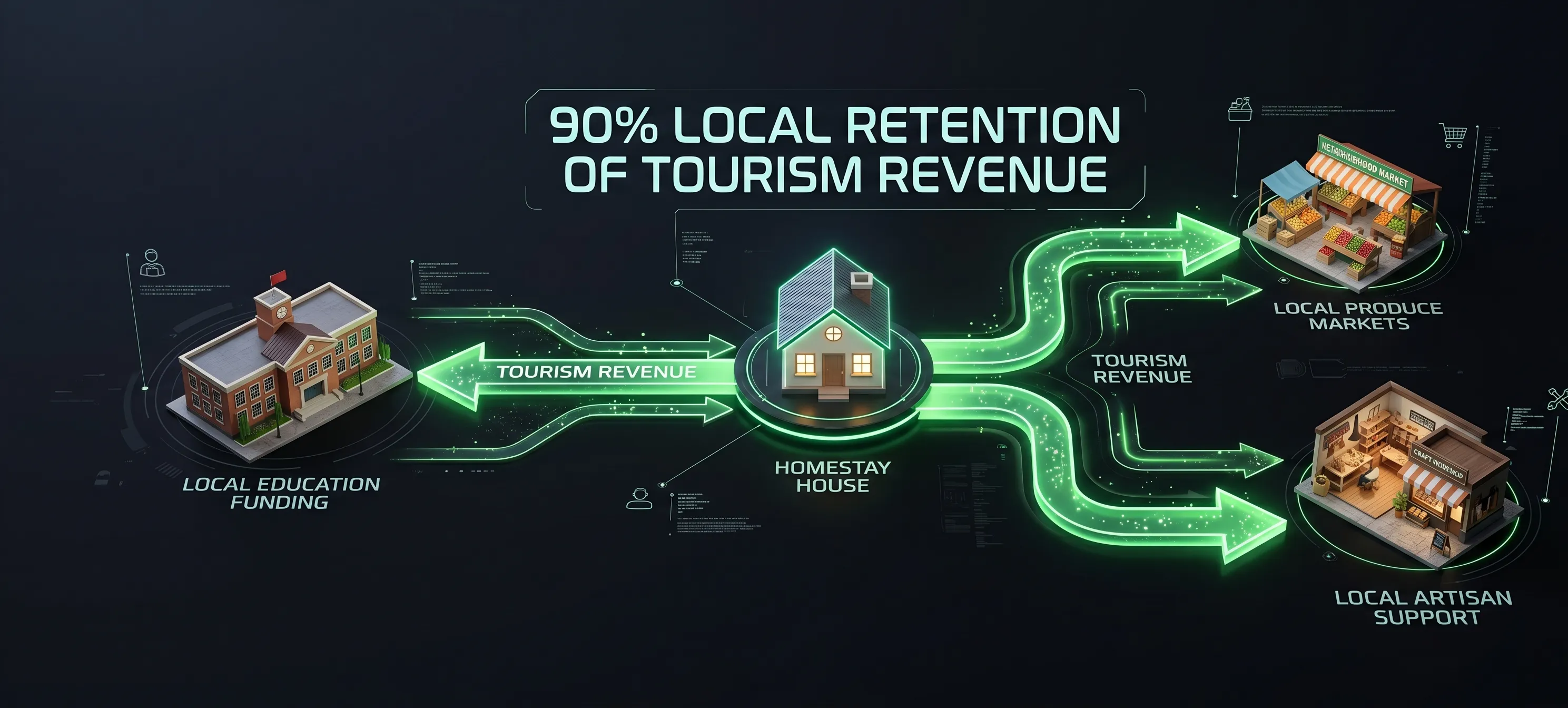
- Direct Economic Impact: Nearly 90% of your stay fee goes directly to the host family, compared to less than 20% that typically stays in the local community with large hotels.
- Environmental Efficiency: Homestays leverage existing residential infrastructure, avoiding the high carbon footprint of new construction and industrial waste.
- Cultural Sovereignty: Homestays help preserve local traditions by providing a financial incentive for families to remain in their ancestral homes.
Our analysis is based on 2026 sustainable travel data from the Agoda Sustainable Travel Survey and Fortune Business Insights.
1. The Economic Power of the “Direct-to-Local” Model
The primary benefit of a homestay for a conscious budgeter is the elimination of “leakage”—the phenomenon where tourism money leaves the local economy. In 2026, the global alternative accommodation market is valued at over $244 billion. When you pay for a hotel, a significant portion of your money covers international marketing and franchise fees. In a homestay, the financial loop is closed.
Revenue Breakdown: Homestay vs. Hotel
| Feature | Global Hotel Chain | Independent Homestay |
|---|---|---|
| Local Revenue Retention | ~15-20% | 85-95% |
| Supply Chain | Centralized/Imported | Hyper-Local/Neighborhood |
| Employment Type | Low-wage seasonal | Family-owned/Entrepreneurial |
| Economic Beneficiary | Shareholders/Corporations | Host Family/Community |
2. Environmental Stewardship and Resource Efficiency
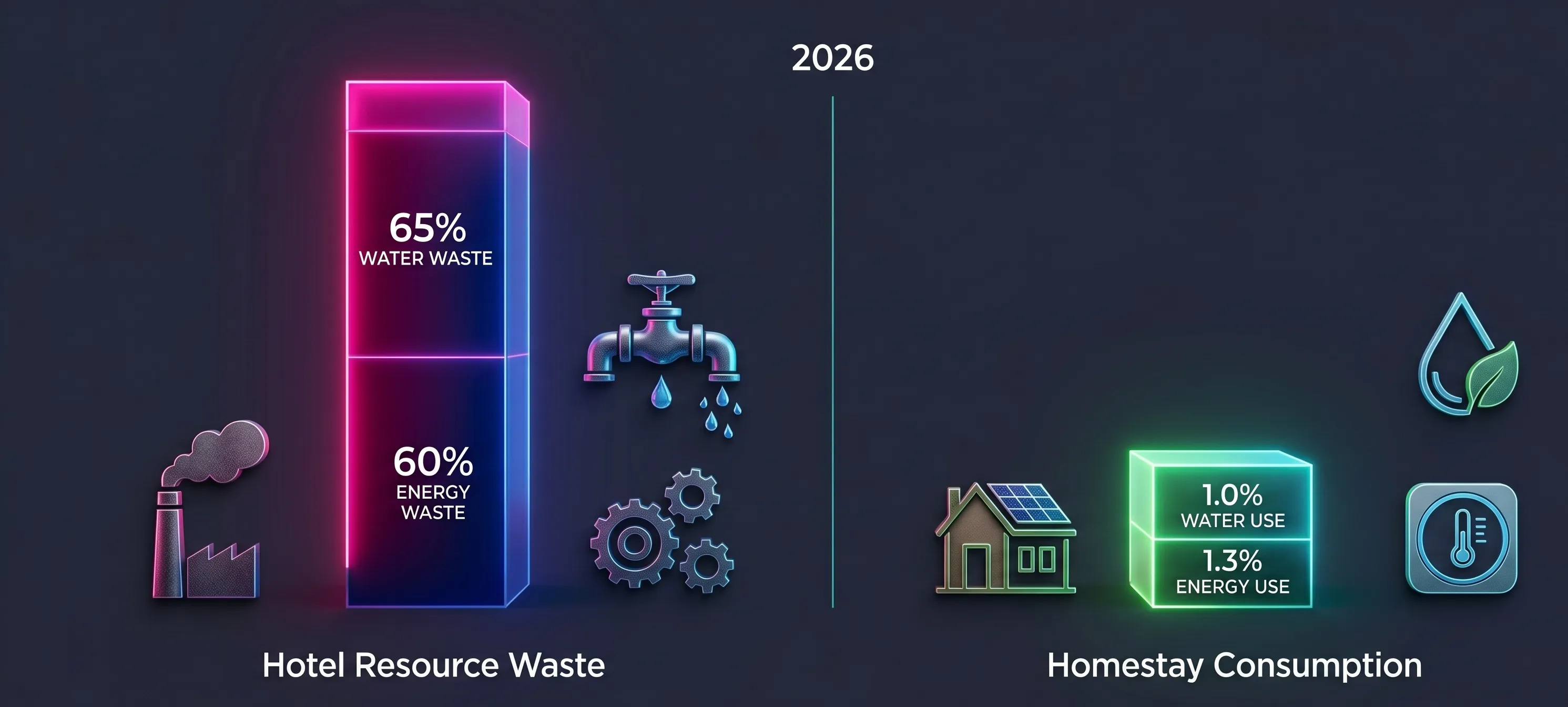
Homestays are inherently more sustainable because they do not require “built-from-scratch” infrastructure. Large-scale hotels are resource-intensive machines; even “eco-hotels” have a higher baseline environmental impact than a family home.
The Infrastructure Advantage
Large hotels require massive daily laundry cycles and constant HVAC in common areas. Homestays operate on a residential scale:
- Water Usage: Laundry is done on an “as needed” basis.
- Energy: Existing grid connections mean no large-scale heating of unoccupied “lobby” spaces.
- Food Waste: Meals are often cooked to order, virtually eliminating the 30% waste seen in hotel buffets.
3. Cultural Sovereignty and Authentic Exchange
Beyond the financial and environmental benefits, homestays serve as a “cultural mediator,” allowing travelers to engage with a destination on its own terms. ### Participating in Daily Rituals In a homestay, you are often invited into the rhythm of daily life—joining a morning prayer or learning to cook a traditional dish. These are genuine human interactions that foster empathy and global understanding.
Empowerment and Gender Equity
"Empowerment in tourism is a negotiated process. Homestays function as spaces where cultural obligations and economic aspirations intersect, often serving as a powerful tool for women’s financial independence."
4. The Budget vs. Value Paradigm
While homestays are often cheaper, the true benefit is the “Value-for-Money” ratio. In 2026, a $60 homestay often provides more “usable” amenities than a $150 hotel room.
Pros
- ✅ Full kitchen access saves ~40% on dining
- ✅ Laundry facilities eliminate 'hotel laundry tax'
- ✅ Hyper-local safety and neighborhood insights
Cons
- ❌ Varying levels of privacy
- ❌ No 24/7 room service
- ❌ Requires more proactive communication with hosts
Frequently Asked Questions
01 Is a homestay safer than a hotel?
In 2026, homestays are considered very safe due to hyper-local accountability. Hosts rely on verified reviews, and you have a local family looking out for you.
02 How do homestays help the local economy?
They prevent 'economic leakage.' Unlike hotels, where profits go to offshore corporations, homestay revenue stays in the community to pay for local goods and education.
03 Are homestays environmentally friendly?
Yes. They use existing housing rather than new construction and have significantly lower water, energy, and food waste levels than industrial hotels.
04 Do I have to interact with the host family?
Not necessarily. Many offer 'private wing' options. You can choose your level of immersion—from shared dinners to independent studio apartments.
05 Can I work remotely from a homestay?
Most 2026 homestays cater to digital nomads with high-speed Wi-Fi. Always check reviews specifically for 'internet stability' before booking.
06 Are homestays cheaper for long-term travel?
Yes. Homestays typically offer 20-40% discounts for stays longer than two weeks, and kitchen access significantly reduces daily food costs.

Yukta Berry
Lead Technical Analyst
Specializing in data-driven metrics and verifiable industry standards for sustainable travel.