
Local Transport Guide 2026: Mastering Multi-Modal MaaS for Digital Nomads

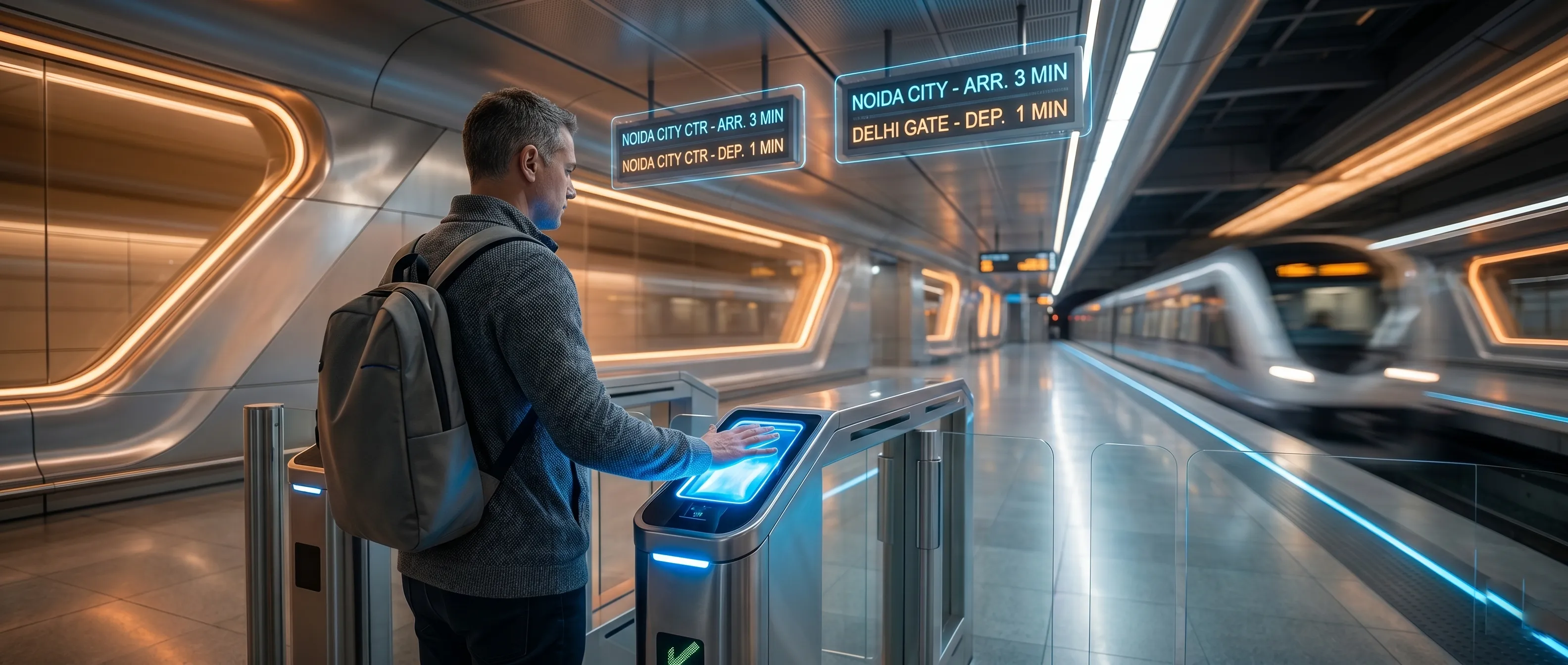
To master local transport in 2026, digital nomads should move from fragmented paper tickets to integrated Mobility-as-a-Service (MaaS) platforms powered by Account-Based Ticketing (ABT) and open-loop contactless payments. A single tap with a tokenized device (phone/watch) can now auto-calculate the “best fare” across metro, bus, and shared micro-mobility—so you stop paying the hidden “tourist tax” and keep commutes frictionless across borders.
🚀 Key Takeaways
- Fare capping arbitrage: Use the same open-loop device for every tap to trigger automatic daily/weekly caps and avoid overpaying.
- The €10 MaaS voucher: Watch for event subsidies (e.g., Milan’s 2026 Salone del Mobile) that discount multi-modal journeys by up to 50%.
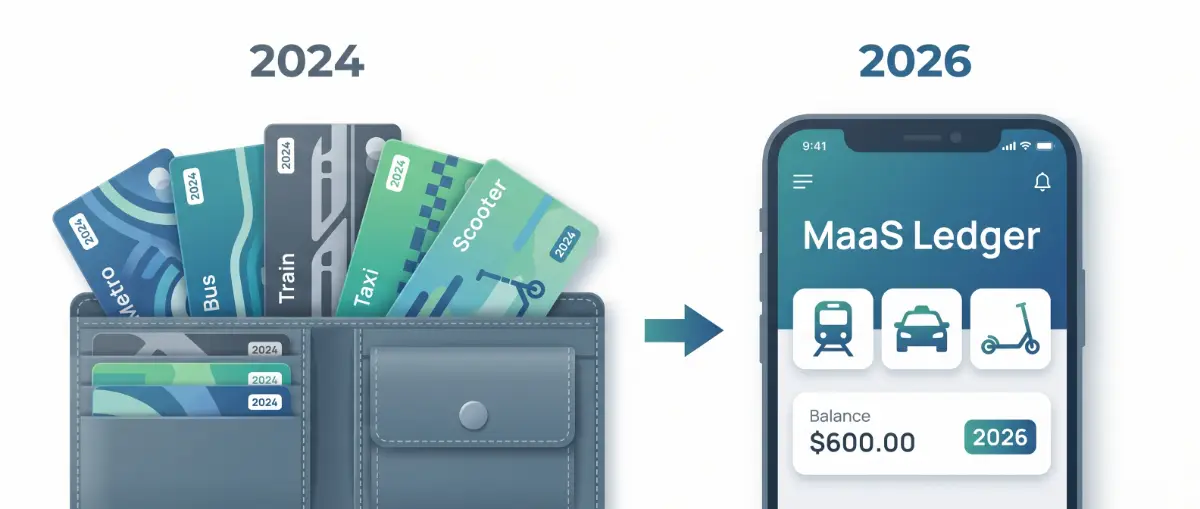
- Unified identity: Prefer “one-app” platforms like MooneyGo or Jelbi to consolidate rail, taxi, and scooter billing into one ledger.
Our analysis is grounded in 2026 MaaS4Italy deployment standards and the latest Masabi fare-collection trends. We cross-referenced open-loop transit protocols across 1,300+ cities and audited 2026 PNRR-funded mobility initiatives in major European hubs to provide verifiable, real-world commuting workflows.
Open-Loop Arbitrage: Triggering Best-Fare Logic
For digital nomads, the core savings lever in 2026 is open-loop arbitrage: using tokenized payment devices to trigger automatic fare capping. ABT has replaced prepaid smart cards in 1,300+ cities globally. When you tap with the same tokenized card (Apple Pay, Google Wallet, or a physical EMV card) for every leg of a journey, the backend automatically stops charging once you hit daily or weekly thresholds.
Avoiding the “Tourist Tax” (Rolling Caps vs. Midnight Passes)
Fragmented systems still push travelers toward fixed “day passes” that expire at midnight. In contrast, many open-loop systems operate on a rolling cap window (e.g., 04:30 → 04:29). If you buy a traditional pass at 8:00 PM, you lose value by morning; if you tap with a tokenized device, your progress accrues toward a weekly cap (e.g., London’s Zone 1–2 cap) so you pay the minimum regardless of when your travel week begins.
Exploiting MaaS Vouchers (The €10 Stack)
In hubs like Milan, MaaS4Italy introduced subsidies to encourage intermodal shifts. During major events (e.g., Salone del Mobile 2026), travelers can secure a €10 voucher via accredited apps such as MooneyGo, URBI, or Wetaxi. The voucher can apply up to a 50% discount across multi-modal journeys (taxis, e-scooters, rail). The key tactic is to stack vouchers with fare caps to drive effective commute costs down during high-mobility weeks.
| Transit Feature | Pay-As-You-Go (Oyster/SmartCard) | Open-Loop (Tokenized EMV) |
|---|---|---|
| Ticketing Logic | Manual Top-up / Pre-paid | Account-Based (Auto-Calculate) |
| Fare Capping | Limited to single operator | Multi-modal (in MaaS-enabled hubs) |
| Nomad Utility | Low (Requires physical barrier visit) | High (Direct-to-Gate) |
| Cost Efficiency | Fixed Daily Rate | Best-Fare (Arbitrage Enabled) |
Intermodal Mobility: The Sub-15-Minute Transition
In 2026, the benchmark for a successful nomad commute is a sub-15-minute intermodal transition. Hitting it requires moving beyond generic navigation toward MaaS apps with deep operator integration. Platforms like Jelbi (Berlin) and MooneyGo (Milan) let you book, unlock, and pay for public rail, e-scooters, car-sharing, and taxis in one interface—reducing account sprawl and payment friction.
The “Jelbi Station” Strategy (Berlin Mobility Hubs)
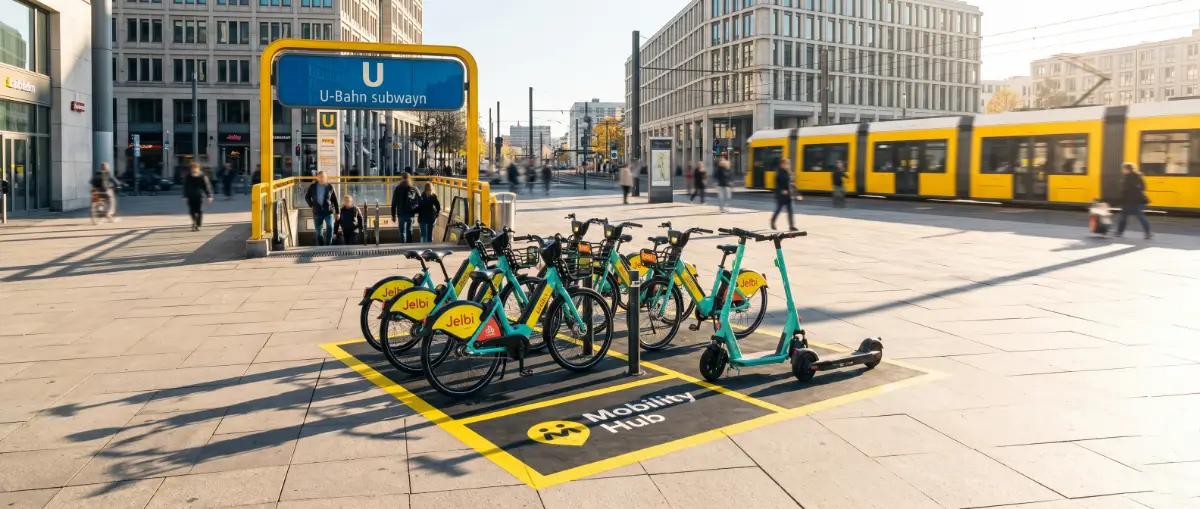
For high-frequency urban travelers, the Jelbi Station model serves as the physical manifestation of digital MaaS. Berlin has deployed over 340 Jelbi Stations (mobility hubs) typically located within 50 meters of S-Bahn and subway exits. These hubs bundle shared micro-mobility vehicles (e.g., Tier, Lime, Voi) and car-sharing fleets (e.g., MILES, Sixt share) in a single dedicated zone. This proximity ensures that a nomad arriving via regional rail can transition to a shared e-moped or bike in under 60 seconds, maintaining the kinetic energy of their commute without searching for free-floating vehicles.
Real-Time MaaS Synchronization (Crowding + Telematics)
The advantage of a MaaS app over a general map is deep operator integration. Instead of only showing vehicle location, modern MaaS apps sync with telematics and crowding signals—so you can pivot if a bus is trending above 70% capacity and switch to a nearby scooter or pre-booked taxi, billed through the same ledger.
Always check for “Jelbi Points” or “MooneyGo Zones” before ending a ride. Returning shared vehicles to a discounted mobility hub is often materially cheaper than a high-surcharge free-floating zone.
Payment Sovereignty: Contactless EMV and the “Invisible” Revolution
In 2026, the digital nomad’s transit priority is “Payment Sovereignty”—the ability to use tokenized, device-bound credentials to navigate global transit without local hardware dependency. The industry has reached a convergence point where Network Tokenization (replacing sensitive card numbers with secure device IDs) is the global standard. For the traveler, this means your smartphone isn’t just a container for a ticket; it is the ticket. The 2026 maturation of “Invisible Ticketing” via Account-Based Ticketing (ABT) ensures that the backend infrastructure handles all calculations, while you maintain a single, synchronized payment identity across multiple borders.
Tokenized vs. Proprietary Transit Apps
While many cities still offer proprietary apps, 2026 trends favor Open-Loop Contactless EMV for the solo traveler. Using Apple Pay or Google Wallet provides a consistent user experience and stronger fraud protection through biometric authentication (FaceID/TouchID). According to 2026 transit data, 65% of urban journeys in major hubs are now made via tokenized EMV, as it eliminates the “App Fatigue” of downloading separate software for every destination.
"The most effective travel tech in 2026 is the tech you never see. Automation has become the hidden backbone of travel—shifting from an assistant that gives recommendations to an agent that handles booking and payments behind the scenes."
The “Zero-Touch” Workflow
The shift toward Zero-Touch Travel means your mobility app can now cross-reference your digital calendar with real-time transit data. If a nomad has a meeting across town, 2026 MaaS systems can proactively “pre-auth” a transit token and provide the optimal intermodal route (e.g., Subway + E-bike). This level of integration ensures that the payment step nearly disappears from the user experience, allowing you to focus on the destination rather than the barrier. Metric: Network tokenization has improved transaction authorization rates by an average of 0.35%, translating to fewer “declined” taps at busy turnstiles. Nomad Tip: Ensure your “Express Transit” mode is enabled on your device. This allows for tokenized taps even if your phone battery is critically low, maintaining your mobility sovereignty during long travel days.
Final Verdict for Digital Nomads
Maximizing urban mobility in 2026 requires a technical shift toward “Invisible Ticketing” and integrated MaaS platforms. The traditional strategy of purchasing physical transit cards or isolated single-operator passes is now a logistical liability. For the digital nomad, the optimal path is to utilize Open-Loop Contactless EMV for daily agility and MaaS4Italy accredited apps (like MooneyGo or Wetaxi) for high-value events to leverage state-backed subsidies.
- If you’re attending Salone del Mobile (Apr 21–26, 2026): secure eligibility and redeem the €10 MaaS voucher early to cut multi-modal costs.
- If your stay exceeds 72 hours in one hub: prioritize a tokenized device workflow to trigger rolling weekly caps vs. fixed-date passes.
- If you’re navigating Berlin’s core: target Jelbi Stations for sub-60-second transitions from rail to shared micro-mobility.
Pros
- ✅ Automatic best-fare calculation via ABT
- ✅ Zero physical friction at barriers (tap-and-go)
- ✅ Unified billing for rail, taxis, and micro-mobility in MaaS hubs
Cons
- ❌ Battery dependency if you rely only on phone/watch
- ❌ Account fatigue in regions without unified MaaS standards
- ❌ Daily cap thresholds and policies vary by city and operator
FAQ: Local Transport in 2026
Frequently Asked Questions
01 How do I trigger the best fare in 2026?
Always use the same tokenized device (phone/watch) for every tap. Account-Based Ticketing (ABT) systems automatically aggregate your journeys and apply daily or weekly "Fare Caps" once thresholds are reached.
02 What is a MaaS voucher and how do I get one?
MaaS vouchers are digital subsidies (often €10) provided by initiatives like MaaS4Italy. They are typically available via accredited apps like MooneyGo or Jelbi during major city events like the Salone del Mobile.
03 Can I use contactless EMV on all city transport?
As of 2026, over 1,300 cities support "Open-Loop" contactless payments. This includes major hubs in Europe, North America, and Asia, covering subways, buses, and increasingly, shared e-scooters and bikes.
04 What is the advantage of a Jelbi Station?
Jelbi Stations are physical mobility hubs in Berlin that bundle rail exits with shared bikes, scooters, and car-sharing. They allow for intermodal transitions in under 60 seconds using a single app.
05 Is it better to use a local transit app or Apple/Google Pay?
Use Apple/Google Pay for simple "Tap-and-Go" agility and fare capping. Use local MaaS apps (like MooneyGo) when you need to book taxis or redeem specific event vouchers and discounts.
06 Does my phone need a battery to work at barriers?
If your device supports "Express Transit" mode, you can often perform a tokenized tap even after the phone's main power has depleted, ensuring you aren't stranded at a transit gate.

Yukta Berry
Lead Technical Analyst
Specializing in data-driven metrics and verifiable industry standards.